
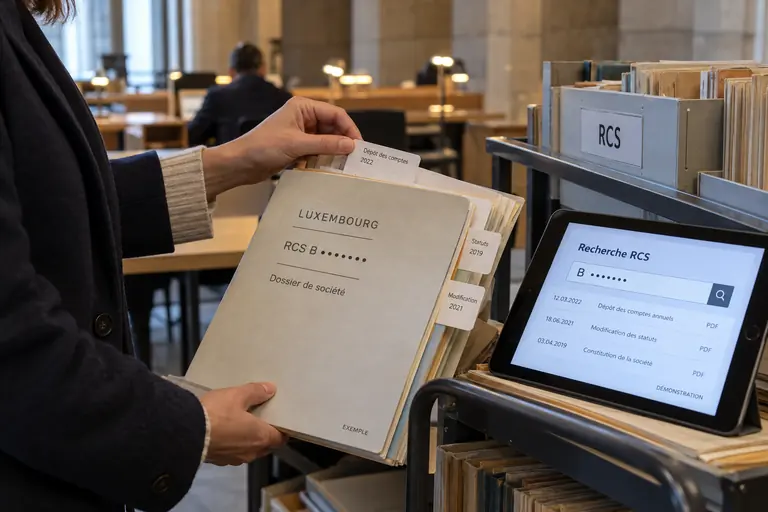
Spain's commercial register offers electronic accounting book legalisation as a formal step in which the registrar of the company's registered office stamps the digital ledgers, such as the journal and the inventory and annual accounts book, with a certificate of presentation. The books are submitted as files rather than bound volumes, and the registrar checks formal compliance, not accounting merit. The result gives the records an official date of presentation that can matter in disputes, audits and inspections, and it replaces the old routine of taking numbered paper volumes to be stamped.
The idea behind legalising books
Spanish commercial law requires businesspeople and companies to keep orderly accounts. Legalisation is the formal step that records, in a public office, that the books exist in a certain form at a certain time. It does not verify that each entry is correct; it stamps the records so that later alteration is harder to hide. In the past, companies took bound volumes with blank, numbered pages to be stamped before use. Digital bookkeeping made that approach obsolete, and electronic presentation replaced it.
The accounting data is exported from the company's software, submitted to the registry, and returned with evidence that it was presented. For a company, the practical value is evidential. Banks, tax inspectors, liquidators and courts may ask for the legalised books, and a company that can produce them with the registrar's certificate shows a basic level of order. A company that cannot may face questions about the reliability of its records.
Spain also has a tradition of public confidence in registrars as independent professionals, which is one reason the system relies on them for formal control. The electronic procedure keeps that role while removing paper, travel and storage costs for the business. It is useful to think of legalisation as a date stamp on evidence. If someone later alleges that entries were rewritten after a dispute arose, a legalised file presented earlier gives a reference point against which any version can be compared by an expert or a judge.
Which books are involved
The principal records for a limited company are the journal, which lists operations chronologically, and the inventory and annual accounts book, which collects the balance sheets and statements prepared each period. Companies also keep a record of shareholders' meetings and, depending on the company type, books of registered shares or partners. Not every book follows the same route. Corporate records such as minutes or the register of members have their own rules, and some are legalised in different ways from accounting ledgers. Before presenting anything, the company should confirm with the registry which of its books go through the electronic accounting procedure.
Entrepreneurs who are not companies, such as sole traders subject to commercial accounting duties, also have obligations, although the volume of records is usually smaller. The principle remains the same: orderly books, formal presentation, and official evidence that they were deposited. Companies with several activities or branches should also ask whether any special or sector books are required in addition to the general ones. Regulated businesses sometimes keep specific registers, and the fact that a record exists for supervisory reasons does not necessarily mean it follows the same legalisation procedure.
Competent registry and timing
The registry competent for the filing is the one covering the registered office. A company that moves its office should keep that in mind, since the books of different periods may end up with different registrars. The corporate body of registrars publishes the procedure and the technical conditions of the electronic channel. The law sets a limited period after the financial year ends for presenting the books. The exact deadline should be taken from current regulations rather than memory, and late presentation can carry consequences, including difficulties for later filings. Starting early leaves room to correct technical problems.
The books of a period are normally presented after the accounts have been prepared, because the inventory and annual accounts book contains them. Coordinating this step with the annual cycle of closing, approval and deposit prevents the usual rush. Where a company has been dissolved or is in liquidation, the books still matter. Liquidators need orderly records to prepare the final balance, and the registry may be asked for the legalisation evidence of earlier periods when the process is reviewed. Retaining everything until the legal retention period ends is the safest policy.
Preparing the files
The data should be exported from the accounting program in the format the registry accepts, with entries in order, no gaps in numbering and consistent identification of the company and the period. Accountants usually run the software's own consistency checks before generating the final file. Every file is fingerprinted when submitted, which is why changes after export are a mistake. If an entry has to be corrected, the corrected data should be exported again as a new file. Mixing versions makes it hard to show later which file corresponds to which presentation.
Because registry systems are updated over time, companies should also check whether the program they use is compatible with the registry's requirements for that period. Vendors normally announce compatibility, and a short test before the deadline is cheaper than a failed submission on the last day. Small organisations sometimes assume that using a cloud accounting service handles everything automatically. Such services usually provide the export, but the formal presentation and the signature remain acts of the company, so someone in the business has to check that the step was completed.
Submission, signature and the certificate
The filing is made electronically through the registrars' secure channel. The person submitting needs a qualified electronic certificate and the authority to act for the company, whether as an administrator or as an authorised professional. The system checks the formal aspects of the files and the identity of the sender. After the formal review, the registrar returns the legalisation evidence, usually as a signed electronic document linked to the books submitted. That certificate and the matching files should be saved together in a secure archive.
The company should record where they are stored and who has access. If the registry finds a defect, such as an incomplete file or inconsistent data, it communicates it so that the company can correct and resubmit. Responding quickly matters because the book is not considered properly presented until the process is complete. Some advisers recommend a short internal checklist for each presentation: books selected, period confirmed, files exported, signature valid, receipt stored. Ticking through it takes minutes and proves, if ever necessary, that the procedure was followed deliberately rather than by chance.
Common errors and good habits
Frequent problems include presenting to the wrong registry, forgetting a book, exporting files that do not correspond to the period, and letting the certificate expire. Another trap is assuming that an accounting adviser has handled the formality without confirming it, then discovering the gap during an audit or a sale. Good habits are simple and cost almost nothing, yet they are what separates a calm annual cycle from a scramble. Keep a calendar for annual obligations, assign one person to the legalisation task, keep the exported files unchanged and store receipts securely. Review the instructions of the registry before each season because technical conditions can change.
This is general information, not advice on a specific case. Companies with unusual structures, groups, or records held abroad should consult their advisers about how the Spanish requirement applies to their situation. Training new staff in this routine is worthwhile, and a short handover note should name the registry used, the books presented and the folder where the certificates are kept. The step happens once a year, so knowledge is easily lost between cycles, and a written note of who did what last time is often the best protection against missed deadlines.
Frequently asked questions
Does legalisation prove that my accounts are correct?
No. The registrar checks formal requirements and records that the books were presented on a given date. The accuracy of entries remains the responsibility of the company and its administrators. Legalisation mainly provides official evidence that the books existed in that form at that time.
Which registry should receive the electronic books?
The commercial registry covering the company's registered office. If the office has moved, check which registry was competent for the period concerned. The registrars' corporate body publishes the procedure and technical conditions, and it should be consulted before each filing season.
What happens if I present the books late?
Late presentation can bring consequences and may complicate other formalities, so it is best avoided. Check the current legal deadline and any registry instructions, and speak to an adviser if a period has already passed. Acting quickly is generally better than waiting.