
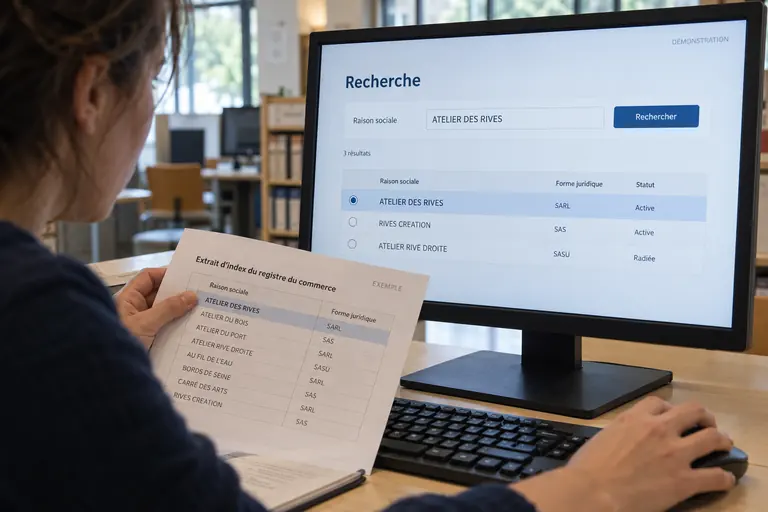
Myanmar company register and business records are maintained by the Directorate of Investment and Company Administration, known as DICA, under the national Myanmar Companies Law. Companies receive a registration number, and their details, such as directors, shareholders, address and filings, are held in an electronic system that replaced paper files for many procedures. Local companies, foreign companies and branches are distinguished, and investment permits are handled separately. Political and administrative disruption in recent years means that current practice should always be confirmed.
DICA and the Myanmar Companies Law
Company registration in Myanmar is administered by the Directorate of Investment and Company Administration, usually shortened to DICA. It operates under the national ministry responsible for investment and economic affairs and applies the Myanmar Companies Law, which replaced a much older colonial-era statute and modernised the rules on incorporation and governance. The law distinguishes private companies, public companies and companies limited by guarantee. It also regulates foreign companies and their branches, and it sets duties on annual returns, meetings and the keeping of registers.
Compliance with these duties is one measure of how well a company is run. An online system was introduced to allow companies to be incorporated and to file documents electronically. This reduced the need to attend counters, and it created a searchable database of entities. The extent of public search and the services available have changed over time, so users should check the current situation. Since political events disrupted administration in recent years, practice and access have varied.
Foreign readers should not assume that older descriptions of smooth online services still hold, and should rely on current information from the authority or a local adviser. Companies are expected to keep a registered office, to appoint at least the minimum number of directors and to file notices when these details change. A search that shows an address or director list that no longer matches reality may simply reflect late filings, but repeated lateness is itself a useful indicator of weak administration.
Types of company and foreign participation
Private limited companies are the most common form, with a limited number of shareholders and restrictions on share transfers. Public companies can offer shares to the public and face stricter disclosure rules. A company limited by guarantee is generally used for non-profit purposes. Foreign investors can hold shares in companies, with a rule that allows a foreign shareholding of up to a defined proportion without the company being treated as a foreign company, and with sector restrictions on activity. Whether a company counts as local or foreign affects its rights, including those on land use.
Foreign companies may establish branches or representative offices with the permission of the competent authority. A representative office usually cannot trade, and its registration record should show this narrower role. A branch is part of the overseas parent, so the parent's creditworthiness matters. Joint ventures with state entities and with military-linked conglomerates exist in certain sectors. Several governments and international bodies have imposed sanctions on specific entities connected with the military, so ownership analysis is an essential element of any serious check.
Registration numbers and companion permits
A company that has been registered receives a unique registration number and a certificate of incorporation. These identifiers appear in contracts and filings and are the main way to distinguish between companies with similar names, which are quite common in a market where many firms use words such as golden, royal or myanmar. Tax registration with the internal revenue authority is separate, and a company should hold a taxpayer identification number.
Commercial tax and income tax filings are tracked by this body, and a firm active in trade will normally have both a corporate registration and a tax registration. Investment projects may require permits or endorsements from the investment commission, which approves projects according to sector, size and location. The permit sets out conditions and incentives, and it is useful to see when a counterparty claims to be a foreign-invested business.
Sector licences apply to activities such as banking, insurance, telecommunications, mining and energy. A company registry entry does not prove such licences, so request them and, where possible, confirm with the regulator. Names matter in a particular way. A company may be known by a trading style in Yangon or Mandalay that differs from the registered name, and contracts should always use the full legal name and registration number to avoid argument about which entity is bound.
Searching and requesting records
A search normally begins with the exact company name or, better, the registration number. The online system allows entities to be located and basic details to be displayed. Because names in Burmese script and English can differ, a person who cannot find a result should try variants and ask the company for the exact registered form. Official copies and certificates can be requested from DICA, either through the electronic system or at its offices, by the company or its authorised representative. Third parties may need to rely on the company supplying documents, as access to some filings is restricted to the entity or to authorities.
Local law firms and corporate service providers are accustomed to handling these requests and can assist foreign clients. Because circumstances have changed, choose advisers with recent experience of the current procedures and with a clear understanding of compliance issues. For use outside the country, documents may need translation, notarisation and legalisation through channels that are acceptable to the destination state. Check the requirements of the receiving institution before starting, as practice varies and some institutions have heightened scrutiny of documents from the country.
Transparency, ownership and compliance concerns
The registry gives a view of directors and shareholders as filed, but filings may be out of date or incomplete. Companies with holding structures abroad or with nominee shareholders can obscure the real owners, and the registry alone will not penetrate such layers. Beneficial ownership transparency has been the subject of international attention, and global bodies have flagged weaknesses in monitoring of financial crime. As a result, banks and companies abroad often apply enhanced due diligence to dealings that involve Myanmar entities.
Sanctions regimes in several jurisdictions list certain companies and individuals. Screening names against the lists is necessary, yet it does not replace a review of the ownership chain, since a company may be controlled by a listed party without being listed itself. Financial statements of private companies are not generally public. Request audited accounts and tax documents directly, and consider independent references, bearing in mind that currency controls and banking conditions can affect the practical value of financial data.
A careful approach to doing business
Start with legal advice on the current rules for your sector and on any restrictions that apply to your home country or to your bank. A well-informed assessment before contacting counterparties helps to avoid transactions that cannot be completed or that create legal exposure. Gather the incorporation certificate, the latest filings, the tax registration and any investment permit or sector licence, and verify them with the relevant authority where possible. Compare names, numbers and addresses, and demand explanations for any differences in writing. Examine who truly controls the business and whether any linked entity appears on a sanctions list.
Ask for an ownership chart signed by the company and supported by documents, and be prepared to walk away if the answers are incomplete. Record every step and refresh the review at regular intervals. In an environment where conditions have shifted quickly, up-to-date documentation is the best defence for a company that needs to show it acted responsibly. A local representative who can visit offices, collect certified copies and report on conditions on the ground adds a layer of assurance that remote checks cannot match, particularly when the transaction involves goods, premises or ongoing operations in the country.
Frequently asked questions
Which authority registers companies in Myanmar?
The Directorate of Investment and Company Administration, known as DICA, registers companies under the Myanmar Companies Law. It operates an online system for incorporation and filings. Because administrative conditions have changed in recent years, confirm the current procedures and public access with the authority or a local adviser.
Does a registry entry show who really owns a Myanmar company?
Not always. The registry shows directors and shareholders as filed, but holding structures or nominee arrangements can hide the real owners, and filings may be outdated. Request an ownership chart supported by documents and screen all names against relevant sanctions lists.
Is an investment permit the same as company registration?
No. Registration creates the company, while an investment permit from the investment commission approves a particular project with conditions and incentives. Foreign-invested firms often hold both, and sector licences may also be required. Ask for each document and confirm it with the issuing body.