
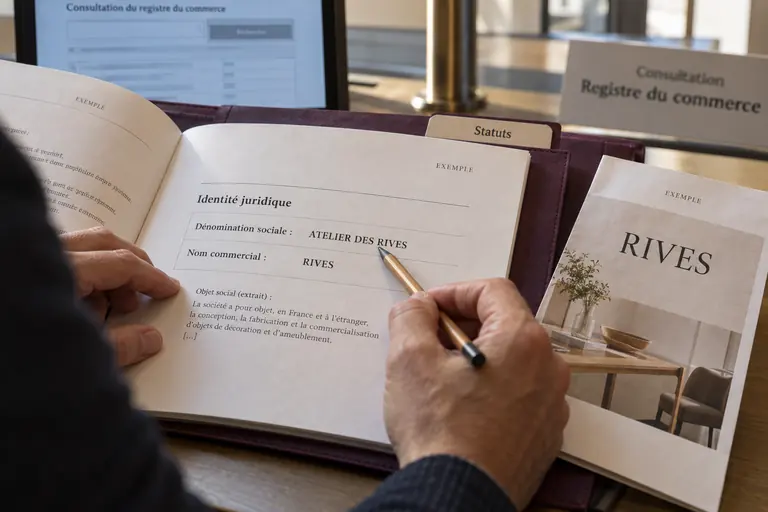
Spain's central company register and its company names section form the national layer above the provincial commercial registers. While each company is entered in the register of its own province, this single office in Madrid keeps the database of registered denominations, so that a new name can be tested against every existing one. It issues the certificate that founders and notaries need before a deed of incorporation can be signed. Operated under the Ministry of Justice with technical support from the registrars' association, it works largely through electronic requests.
A national office sitting above provincial registers
Spain organises commercial registration by province: a company is entered where its registered office is located, and the registrar of that province examines the deed. Alongside this network exists one office with nationwide competence, which cannot replace the provincial ones but performs tasks that none of them could do alone because their territory is limited to a single province, and which therefore sees the whole country at once.
One of those tasks is keeping the section of company names, the tool that shows whether a given name is still free. The office also receives data forwarded by the provincial registers and helps with the publication of registered acts in the official commercial register bulletin, so that the system offers a view of the whole country and the public can follow what has been recorded.
According to the body's own presentation, it depends on the Ministry of Justice and is based in Madrid. Its technical management relies on the association of registrars, and its services are requested electronically. Certificates are issued in electronic form and carry a secure verification code, which allows the recipient to check that the document is authentic and has not been altered since it was issued.
Seen from the user's side, the arrangement means two different questions are answered at two different levels. Who the company is, what it does and who manages it are answered by the provincial register of its registered office. Whether a proposed name is still available is answered nationally. Keeping this split in mind avoids sending a name enquiry to a provincial office, or a request for managers' details to the central one.
What a company name is and how strictly sameness is judged
A company name is the title by which a company is identified in law. Unlike a trade name or a trademark, which protect the signs under which a business presents itself to customers, it identifies the legal subject that signs contracts, bears obligations and answers to third parties. A business may use several commercial names but has only one corporate name, and the law protects that unique identity.
The law requires the name to include an indication of the corporate form, such as limited liability company or public limited company, or the usual abbreviation. This tells anyone who deals with the firm what kind of liability regime applies. There are also limits on words that suggest regulated activities or particular public bodies, which cannot be used freely without meeting the conditions the law sets for them.
Identity between two names is assessed broadly. The test is not restricted to an exact match of letters; it also covers minimal differences such as punctuation, articles or graphic variations that do not change how the name is perceived. The central office applies this standard to prevent confusion in trade, which is why a clever respelling rarely escapes detection and why founders should aim for a truly distinct name.
The negative name certificate and how founders obtain it
Before the deed of incorporation is signed, the founders must show that the chosen name is free. They request a certificate from the central office confirming that no other company holds an identical name. The notary attaches it to the deed, and in most cases the incorporation cannot be authorised without it, so it is the first practical step in forming a Spanish company and one that cannot be skipped or postponed.
The request may be made by an interested party, a professional adviser or the notary, and it can include several proposals in order of preference. The office answers by indicating which of them is available, and the first free choice on the list is the one that is certified. If every proposal coincides with a registered name, new alternatives must be submitted until a favourable certificate is obtained.
The certificate has limited validity, during which the name is reserved in favour of the applicant. If the company is not formed within that period, the reservation lapses and the name may be taken by someone else. It is therefore sensible to line up the notary appointment before requesting the certificate, and to keep the original for the file, since the notary and the register will both want to see it.
A practical sequence helps founders. They decide on two or three names, ask the office for the certificate, arrange the notary appointment within the reserved period, and only then sign the deed of incorporation with the statutes. A tax identification number is requested afterwards, and the deed is presented to the provincial register of the registered office, which examines it before the company is entered.
Searching names and understanding what a result means
A prospective founder often wants a quick idea of whether a name is likely to be free before paying a notary. Some information about registered names may be consulted, but the official answer comes only in the form of a certificate. A casual search is helpful for brainstorming, while a certificate is what actually carries legal weight, so do not treat a search page as a guarantee of availability.
Finding a similar name in an unrelated sector does not automatically mean the proposal is refused, but the rules on identity are applied to the name itself, not to the line of business, which makes sector arguments of little use. For that reason it is wise to prepare alternatives that differ in a real way, rather than add a letter or change a hyphen, which seldom changes the verdict.
A name that is free as a company name is not necessarily free as a trademark or a domain name. These rights are examined by different bodies under different rules. Founders who intend to build a brand should check the trademark office and the domain registrars separately, to avoid costly rebranding after the company is already operating and has printed its materials.
Name changes, official publication and the bulletin
A company that changes its name must amend its statutes and have the change entered in the provincial register. The new name goes through the same test of availability, so the central office is consulted again and a fresh certificate is needed. The previous name remains traceable in the history of the entry, which helps creditors and business partners who knew the firm under its earlier title.
Registered acts, including incorporations and changes of name, are published in the official commercial register bulletin, which draws on data supplied by the provincial registers and the central office. The bulletin extends publicity to the general public, while the register itself remains the source that gives legal effect to an entry; a notice alone never proves that a name is held.
When researching an older firm, reading both the current name and the former one avoids missing records. Searching only under the present name can hide earlier contracts, court proceedings or published notices that were issued when the company traded under a different title, and which a quick search would never reveal. Cross-checking the identification number settles the question quickly, because that number does not change with the name.
Mergers, splits and conversions raise similar questions. When an entity absorbs another or changes its legal form, the name that results must still satisfy the rules on form indication and availability. Advisers therefore treat the name as part of the structuring plan rather than a detail left to the last minute, because a refused name can delay a whole transaction.
Practical cautions for foreign founders and investors
Foreign founders often prepare a name for a Spanish company in their own language and discover that a similar one is already registered. Planning several variants from the start saves time, because each new request restarts the clock. Remember also that the name must carry the corporate form in a way that the Spanish rules accept, so it is worth checking the format before approaching the notary, who will refuse a deed that ignores the rules.
Investors checking a target should compare the name given in the deed, the name in the register and the name on invoices and websites. Differences can be harmless, for example when a trade name is used, but they can also signal an error or a different entity with a similar title, so any mismatch deserves a polite question. The tax identification number is the cleanest way to confirm identity, since the same number follows the company through every name it has used.
These notes are general and do not replace advice from a notary, a lawyer or a registrar, who know how the rules are applied in practice. Procedures, requirements and electronic services change over time, so the current instructions of the competent office should always be consulted before submitting a request or paying for any certificate, and unofficial intermediaries should be avoided.
Frequently asked questions
Do I need the name certificate to form a Spanish company?
In most cases yes. Before the deed of incorporation, the founders obtain a certificate from the central office confirming that no identical company name exists, and the notary attaches it to the deed. Without that certificate the notary generally cannot authorise the incorporation.
How strict is the test for identical names?
The test is broad. It does not require an exact match of letters; it also catches minimal differences such as punctuation, articles or graphic variations that do not change how the name is perceived. A small tweak to an existing name is therefore unlikely to pass.
Does a free company name protect my brand?
No. Company names, trademarks and domain names are examined by different bodies under different rules. A name cleared by the central office may still clash with a registered trademark, so check the trademark office and domain registrars before investing in branding.