
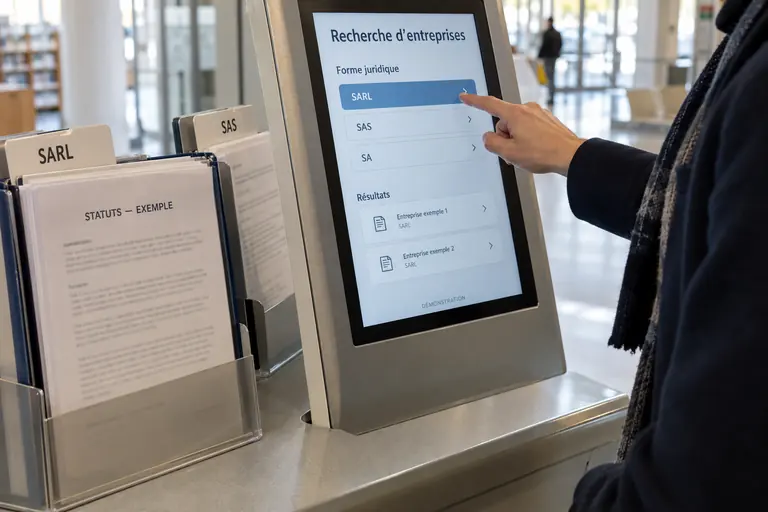
What do Valladolid commercial register company records actually show? They show the legal identity of every company with its registered office in the province: the name, address, corporate purpose, capital, administrators and each later change, all entered after review by a registrar. The office belongs to Spain's state network of mercantile registries and works under national company law. Its content is public for anyone with a legitimate interest, and the entries are presumed accurate in dealings with third parties, which makes them a first stop for lenders, suppliers and buyers.
Where the office fits in Spain's system
Valladolid is the largest city of Castilla y León and a long-standing administrative centre, and its mercantile registry serves the province around it. As in the rest of the country, the registry is a state institution and not a regional one. The autonomous government has no say in how companies are entered, so the rules a reader meets here are the same ones applied in Barcelona, Bilbao or Málaga.
A company belongs to this registry when its registered office is in the province, which may differ from the place where it produces or sells. A manufacturer with a plant on the outskirts of Valladolid but its legal seat in Madrid is recorded in Madrid. Confirming the legal address on a contract or invoice therefore saves time and prevents a fruitless search.
The registrar who directs the office qualifies each document before it is entered, checking its legality, the capacity of those who sign and its consistency with earlier entries. When a deed has defects, the registrar suspends or refuses the entry until they are corrected. That scrutiny is the quiet reason why the register is trusted by notaries, banks and judges.
The business landscape behind the entries
The province has a strong industrial base, with vehicle assembly, component manufacturing and metalworking at its centre, supported by a dense network of suppliers. Agrifood processing, wine from the nearby denominations, and services linked to a university city and a regional administration complete the picture. The register therefore lists a mix of large subsidiaries and small suppliers that live from a few contracts.
For a small supplier, being able to show a clean registry sheet can help win business with a larger customer, since procurement departments often ask for an extract to verify who may sign. For the larger firm, the same sheet helps to confirm that a new vendor is a legal entity with a stated purpose and capital, not merely a name on a quote.
Many entries concern groups. A well-known brand may operate through several companies, one for production, one for sales and one that owns the property. Each is separate in law and separately recorded, so the entity named in a contract matters. Reading the sheet of the correct one avoids misplaced assumptions about who is liable.
The wine sector shows how much variety the register contains. Estates along the river Duero, cooperative cellars and trading houses may all appear under different forms, some as companies in the mercantile registry and others in specialised registers of cooperatives or of designations of origin. A buyer should ask which entity bottles, which owns the vineyards and which sells, and then search the register for the right one.
Anatomy of a company sheet
The sheet opens with the incorporation entry, which fixes the denomination, the legal form, the corporate purpose and the starting capital. Subsequent entries follow in order. They document appointments and resignations of directors, powers of attorney, moves of the registered office, capital operations and structural changes such as mergers. Each carries a date, so the history can be rebuilt step by step.
One feature is useful for foreigners: the sheet states how the administrators act. They may have individual authority, act jointly, or form a board. This detail prevents embarrassing mistakes, such as accepting a contract signed by someone who lacks the necessary joint signature. It is better to read the clause on representation before signing than to discover the limit afterwards.
Annual accounts are deposited in the same office and are available through a separate request. They allow readers to compare turnover trends and equity over time, within the detail permitted by the size of the company. Some filings are brief for small firms. If accounts are missing, ask the company directly rather than assuming a problem.
Corporate changes leave their own trail. When a company merges with another, splits into two or changes its legal form, the sheet records the operation and refers to the companies involved. Following those references lets a reader understand why an older supplier name has disappeared and which entity inherited its contracts, assets and obligations.
Searching step by step
Start with the legal name and, if possible, the tax identification number. The tax number is the surest key because it is unique to each entity and appears on every invoice. If you only know a brand, search first for the legal name behind it on the contract, the website footer or the delivery note.
Next, check the form. A limited or public limited company should appear in the mercantile registry. A cooperative, association or foundation is usually found elsewhere, and a self-employed person is normally not entered at all. This quick classification explains most negative results and prevents the false conclusion that a business does not exist.
Finally, decide what you need. A short informational extract answers a simple question about the current position. A signed certificate is required whenever a formal body will rely on the data. Requests can be filed through electronic channels connected to the registrars' professional association, and applicants abroad commonly use that route. Always confirm charges and timing on the official service.
Language, translation and use abroad
Registry documents are in Spanish, and foreign readers who do not read the language can ask a sworn translator to render them. Many foreign authorities insist on an official translation, and some also ask for an apostille or another legalisation. The requirement depends on the destination country, so the receiving institution is the right party to ask before the registry request is made.
Names of legal forms do not always correspond exactly across borders. A Spanish private limited company resembles a limited liability company elsewhere but is governed by its own statute, and a reader should use the Spanish term in correspondence to avoid ambiguity. When in doubt, quote the exact legal form as shown on the sheet.
Because translators work from the document you provide, order the original first and check that all pages are legible. A clean, complete certificate speeds up the translation and reduces the risk of questions from the foreign authority later in the process.
Dates also deserve care, since a certificate issued now and translated later will still carry its original day of issue. Some recipients accept only recent documents, so ordering the certificate close to the moment of submission avoids having to repeat the whole process.
Limits and good habits
The record is a legal fact, not a credit rating. It does not predict payment behaviour, and it does not capture informal arrangements. Consult accounts, insolvency notices and trade references for a complete picture, particularly when the amount at stake is significant or when you will rely on a single customer for most of your revenue.
Ownership transparency is another limit. The sheet may show a sole shareholder in a single-member company, but in larger structures the ultimate individuals behind a chain of holdings are not displayed. Other sources, subject to their own access rules, handle that question, so ask the competent body if you need it.
Good habits are simple: write down the date of your extract, compare the tax number with the one on the contract, and request a new document before closing a deal. Information that was correct when printed may be overtaken by a later entry.
Frequently asked questions
Which companies must appear in the Valladolid register?
Capital companies such as private and public limited companies must be entered to obtain full legal personality, and branches of foreign firms with a seat in the province are recorded as well. Sole traders are normally not entered unless they choose to be, and cooperatives or associations usually appear in their own registers.
Can I request a document from outside Spain?
Yes, in general. The electronic services linked to the registrars' professional body let applicants abroad request notes and certificates. Provide the exact company name or tax number, state the purpose of the request and check the current charge and delivery time before paying. Ask the receiving authority whether translation or legalisation will be needed.
What is the difference between a note and a certificate?
A simple note summarises what the books currently say and is intended for information only. A certificate is signed by the registrar and certifies the content, so it has formal evidentiary value for banks, courts and public bodies. Choose according to who will receive the document and what they accept.