
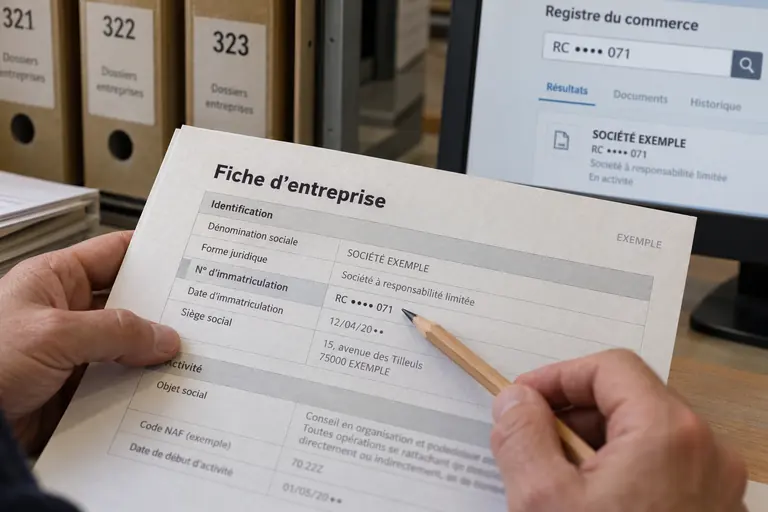
In Freetown and beyond, Sierra Leone's official company register records the incorporation of businesses under the Companies Act and gives each of them a number, a file and a public status. The work is associated with the Corporate Affairs Commission and, for business names and other registrations, the office of the Administrator and Registrar-General. English is the language of the record. A typical file lists the company name, its form, its registered office, its directors and secretary, and its subsequent filings, which together show how the firm has changed.
Two institutions, one overall picture
Registration in Sierra Leone has involved more than one public body. The Corporate Affairs Commission was set up under company legislation to register companies and supervise corporate compliance, while the Office of the Administrator and Registrar-General has long handled registration of business names, deeds and related matters. The division of tasks has evolved, so ask both offices where a particular type of file is kept.
This overlap is a frequent source of confusion for newcomers. A trader may hold a business-name certificate from one office and consider that enough, while a limited company needs incorporation through the corporate registry. When a counterpart presents a certificate, read its title and issuing authority carefully, since they reveal whether you are looking at a company, a sole proprietorship or a partnership.
Reform has taken place in recent years to modernise the registry and to move services to digital platforms. Online tools can speed up searches and filings, but their coverage and functionality may vary. Check the official channels of each body for the current process, and avoid relying on third-party websites that may offer outdated or incomplete information. Screenshots of each online step make a useful record if you are asked later how an extract was produced.
Types of entity found in the records
The legislation allows private companies limited by shares, public companies, companies limited by guarantee and, in some circumstances, unlimited companies. Foreign firms that wish to carry on business may register an external branch. Each of these forms has implications for liability, for the documents that are filed and for the information that is publicly available. A company limited by guarantee is typical for non-profit bodies, whereas an unlimited company is rare and carries serious personal exposure for members.
The distinction between a company and a registered business name is critical. A company is a separate legal person, can own property, sue and be sued, and shields shareholders in most circumstances. A registered business name, by contrast, belongs to an individual or partners who remain personally liable. In dealings with credit or large orders, this difference materially affects how you should structure payment terms.
Non-profit organisations, cooperatives and certain public enterprises are registered differently and appear in separate records. If you are checking a charity, an association or a community enterprise, find out which authority supervises it. Searching the company register for such bodies will often return nothing, which does not mean they do not exist but that they sit elsewhere. Ask the counterpart for the founding documents and the supervising authority so you know where to look.
Searching and requesting documents
A search is easiest when you know the exact company name and number. Names in Sierra Leone often combine descriptive terms and local place names, so partial queries can produce multiple possible matches. When you have a number from an invoice or a tender notice, use it first, and then confirm the name and form in the results. Check, in particular, whether the registered office in the result matches the address printed on the supplier's invoices.
Where a company is found, you may request copies of documents such as the certificate of incorporation, the articles, the notice of the registered office and returns listing directors and shareholders. Certified copies are particularly valuable for banks and for use in court. Ask the office about the format, the fee and the expected delivery time before you place the order. Requests made in person are often processed faster when the applicant brings identification and a short, clear written request.
If you are overseas, a local lawyer, a corporate services provider or a chartered accountant can request documents on your behalf. Provide a clear written instruction listing precisely what is needed and why. Receive scans promptly, retain originals where possible and note the date each document was issued, as its probative value declines as it ages. Insist on a receipt for any payment made to the office, and keep it with the documents.
Beyond incorporation: filings and status
Incorporation is only the beginning of the file. Companies are expected to file periodic returns and to notify the registry about changes to directors, the registered office or share capital. Compliance is not universal, which means the file may lag behind real events. A thin file with no recent filings can indicate a dormant company or a negligent one. Treat repeated gaps in filing as a prompt for more questions rather than as proof of wrongdoing.
The status of a company is an important part of any search. Active, struck off, dissolved or in liquidation are different states with different legal consequences. A struck-off company, for example, no longer exists as a legal person in the usual sense, and contracts signed in its name may expose individuals to personal liability. Always confirm the status on the date you intend to sign.
Charges and security interests may be recorded in the register where the law requires. When you lend money or accept assets as collateral, searching for existing charges helps you understand whether other creditors already hold rights. Where the register does not reveal everything, seek a legal opinion on how security should be created and perfected in Sierra Leone. Charges can be crucial in insolvency, where the ranking of creditors decides who recovers what from the remaining assets.
Tax, licences and sector approvals
Registration with the corporate registry does not substitute for tax registration. The national revenue authority issues taxpayer identification numbers and monitors compliance. For significant contracts, request the number and evidence of good standing, and confirm key elements with the authority where possible. A company with a perfect registry file but poor tax compliance can still present a serious risk. Ask whether the taxpayer holds the necessary clearance for public tenders, which often demand it explicitly in the bidding rules.
Sectors such as mining, fishing, telecommunications, banking and insurance have their own regulators that issue licences. A company's stated activities in the register do not prove that it holds the necessary permits. Ask to see licences, note numbers and expiry points, and verify them with the issuing regulator. This is especially important for extractive projects and for businesses handling public funds. Keep a copy of every licence reviewed, with the date it was checked, in your due diligence folder.
Local councils and ministries add permits connected with premises, markets and trade. Visiting the business address and seeing whether its signs, receipts and staff correspond to the registered name is a simple and effective test. A company that cannot show where it operates, or that gives different names depending on the context, deserves caution. These simple observations frequently catch problems that remain invisible in any register extract or certificate.
Good practice for a careful check
Start with a written list of questions: does the company exist, who owns it, who manages it, where is it located, and is it in good standing? Then match each question to a document and a source. This discipline ensures that you do not stop after finding a certificate and miss the points that matter most for your decision. The resulting checklist becomes a record of diligence that you can show to banks, auditors and colleagues later.
Be sceptical of unusual pressure. If a counterpart urges you to pay quickly, avoids providing documents or offers to supply a register extract through its own contact, take the time to verify independently. Many frauds rely on forged or outdated certificates, and the simplest protection is to obtain the document directly from the issuing office or through your own representative. If something feels wrong, trust that instinct and slow down until a satisfactory explanation has been provided and documented.
Fees, forms and delays are set by the authorities and can change. For transactions of meaningful value, instruct a Sierra Leonean lawyer, document each step of your verification and update the checks before every major payment or amendment of your contract. Doing so keeps the relationship transparent and protects you if circumstances change, or a disagreement arises later on.
Frequently asked questions
Which offices handle company registration in Sierra Leone?
Companies are registered through the Corporate Affairs Commission, while the Office of the Administrator and Registrar-General has traditionally registered business names and certain other records. Responsibilities can shift with reforms, so check with both offices which one holds the file you need.
How does a Sierra Leonean company differ from a registered business name?
A company is a separate legal person that can own property and limits the liability of its shareholders. A registered business name is only the name under which an individual or partnership trades, and the owners stay personally liable. The difference matters when you grant credit.
Is a certificate of incorporation enough to trust a Sierra Leonean company?
No. It shows that the company was incorporated at a point in time, not that it is currently in good standing or properly licensed. Ask for recent filings, tax evidence and sector licences, and consider a visit to the premises or references from other business partners.