
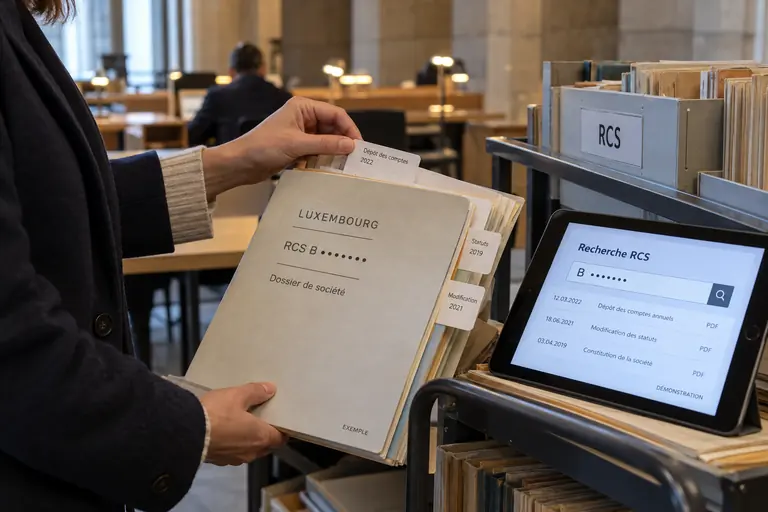
A Guatemala commercial register business book authorisation is the formal approval that turns a merchant's ledgers into recognised legal evidence. It applies to individual traders, business enterprises and companies, which must keep orderly accounts under the Commercial Code. Each book is presented, identified and enabled before entries are made, so that its pages can later be relied on in disputes with partners, suppliers or creditors. Which books are required depends on the type of entity and its activity, and a book used without enabling loses much of its evidentiary weight.
Why books need formal authorisation
Guatemalan commercial law expects merchants to keep accounts in an orderly way and to preserve the papers that back up their operations. To give those records legal standing, the books must go through an enabling procedure with the competent office. Without it, a notebook or a spreadsheet printout remains a private document of limited persuasive force, however carefully its figures were compiled and however honest its keeper may be.
The formality is not mere bureaucracy. Authorised books can be offered as evidence when a partner challenges the figures, when a supplier claims payment or when an authority reviews a company's operations. A well-kept, enabled book supports the credibility of the entity, whereas a book with gaps, erasures or no authorisation weakens it.
For that reason experienced advisers treat authorisation as a day-one task for a new business. It is cheaper and simpler to start with enabled books than to explain later why the first months of trading are recorded on loose sheets, or to try to regularise a set of pages that has already been filled by a bookkeeper who assumed the formalities could wait.
There is a further reason for care. Commercial partners, lenders and investors often ask to see the books of a business before committing funds, and unauthorised books raise doubts about governance in general. A modest investment in compliance at the beginning pays off in smoother negotiations later, especially when ownership changes hands.
Who must keep authorised books
The duty reaches individual merchants, business enterprises and commercial companies. Each category may need a different set of books, and the exact list depends on the legal form and on the activity. A small sole trader will normally have fewer obligations than a joint-stock company with shareholders, directors and detailed corporate records.
Foreign companies with a branch or agency in Guatemala also fall into the net, because they carry on commerce in the country. Their local books should be maintained according to Guatemalan rules, even where the parent follows its own national accounting standards for consolidated reporting at group level.
Not every person who earns income is a merchant in the legal sense. Professionals who offer personal services, employees and some small producers may be subject to tax rules without being bound by the commercial book regime. When there is any doubt about status, ask a lawyer or accountant to classify the activity before spending time on filings.
Accounting books and corporate books
Two families of books are usually discussed. The accounting books reflect the economic life of the business: the inventory records assets and liabilities at a given moment, the daily journal records operations in date order, the general ledger groups them by account, and the financial statements book gathers the periodic results.
Corporate books reflect the life of the company as an organisation. They include the minutes of shareholders' meetings, the minutes of the board where there is one, and the registry of shares or partners' interests. These books show who owns the company and how decisions were taken, and they are consulted in transfers of ownership, financing and disputes.
Not every entity needs all of them. A business enterprise run by an individual does not hold shareholder minutes, while a company will need the corporate set in addition to its accounts. Today many accounting records are kept by software, and the legal question is then how the electronic output is printed, bound or otherwise presented for enabling, which should be confirmed with the office.
How the authorisation procedure works
In outline, the merchant prepares the books, usually with numbered pages, and presents them to the competent office together with an application and proof of identity or representation. The office checks the data of the requesting entity, assigns identification to each book and records the authorisation, often by sealing or marking the pages and noting the number of folios.
The process may be handled by the Registro Mercantil or, depending on the nature of the book and the rules in force, by other designated channels. Because arrangements, forms and charges are revised from time to time, the safest route is to ask the registry what it currently requires, including whether authorisation of loose-leaf or electronic formats is accepted.
Once enabled, a book should be used strictly in order. Entries should follow the sequence of operations, without blank spaces left to be filled later, and corrections should be made through new entries or clear annotations rather than erasures. The authorisation records the starting point, while the discipline of the person keeping the book protects its value over the years.
Common mistakes and how to avoid them
A frequent mistake is to start recording before authorisation, hoping to regularise the pages afterwards. This invites questions about the reliability of the entries and may expose the merchant to objections. The remedy is simple: complete the authorisation before the first entry, and make a calendar note for the date when a book will be filled and a new volume needed.
Another is to confuse the registry's role with that of the tax authority. Enabling a book with the commercial office does not replace tax requirements on invoices, ledgers for tax purposes or electronic reporting. These obligations live in different rules and may require separate registrations, which accountants should coordinate so that records agree across all systems.
A third is neglect of custody. Books must be kept at the registered address or another accessible place, protected from loss and damage, and retained for the period set by law. A lost or destroyed book is a serious inconvenience, and the replacement procedure typically needs an explanation and sometimes a formal declaration to the competent authority.
Keeping books ready for scrutiny
Anyone expecting a bank review, a due diligence exercise or an audit should check that books are complete, authorised and consistent with the public register. Names, addresses and representatives in the books should match the entries in the register, and corporate minutes should reflect appointments that appear in the registry file.
If the company reorganises, changes its form or closes, the books remain important. They document the period of activity and may be requested years afterwards in a tax or commercial dispute. Closing the books properly, storing them safely and noting where they are kept belongs to responsible winding up as much as paying creditors does.
Finally, when advising newcomers, it helps to explain the logic behind the rule. The law gives merchants the benefit of presenting their own books as evidence, provided they have been kept in the prescribed manner. The enabling procedure is the price of that benefit, and in most cases it is a modest one compared with the protection it brings.
Trainers and accountants who work with several small clients often keep a simple checklist: identify the entity, list the books it needs, confirm the form accepted by the office, present them for enabling, record the date and the folio count, and store the originals securely. Following the same sequence each time makes errors rare and provides a trail that is easy to show to inspectors.
Frequently asked questions
What does authorising business books mean in Guatemala?
It means presenting the merchant's accounting or corporate books to the competent office so that they are identified and enabled before use. Once authorised and properly kept, they can serve as evidence in disputes or reviews. A book used without enabling carries far less weight and may raise questions about the reliability of its entries.
Which books usually need to be authorised?
Commonly the inventory, the daily journal, the general ledger and the financial statements book on the accounting side, and meeting minutes and the registry of shares or partners' interests on the corporate side. The exact list depends on the type of entity and its activity, so confirm it with the registry or a local adviser.
Does authorisation replace tax record-keeping rules?
No. Enabling books with the commercial office is a separate matter from tax obligations such as invoicing, tax ledgers and electronic reporting. Each regime has its own authority and requirements, so merchants should coordinate them with their accountant to keep all records consistent and avoid duplicated or contradictory entries.