
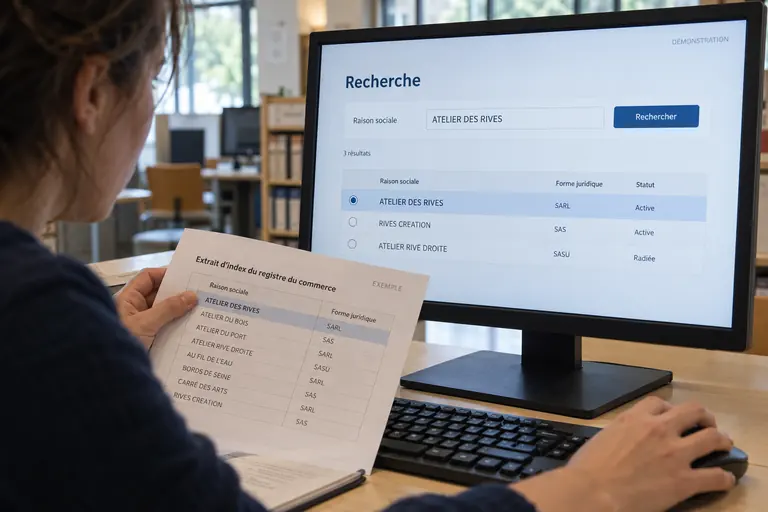
Kosovo's company register and business records are held in a single national body, the Kosovo Business Registration Agency, usually known as ARBK. Unlike systems spread across many local courts, one agency records every entity that is legally established in the territory and issues its registration number. The files cover names, legal forms, addresses, owners and managers, and later changes. Albanian and Serbian are the official languages, English appears widely, and the euro is the currency in use, which helps foreign readers interpret capital and prices.
One national agency instead of many courts
The key institution is the Agjencia e Regjistrimit të Bizneseve, ARBK, which sits under the ministry responsible for industry, entrepreneurship and trade. Because it is a central agency, a foreign reader has one place to ask whether a company exists. That is simpler than countries where registers are split between regional courts or chambers.
The country declared independence in the previous decade and has since built its own legal framework, replacing earlier rules and aligning with European standards where possible. This reform history is useful background. The names of legal forms, the thresholds and the formalities can differ between an older document and a recent one, so the date on every paper counts.
Centralisation also helps with consistency. A company's registration number, name and legal form are recorded once, and the agency can issue certificates that other institutions accept. If someone sends you a certificate that looks unusual, the agency is the party that can confirm whether it is genuine.
Legal forms and who answers for the debts
Kosovar law distinguishes several forms. The individual business suits a person working alone. General and limited partnerships join several people. The limited liability company, written SHPK in Albanian, and the joint-stock company, SHA, give investors a more structured framework. Branches of foreign firms can also be recorded.
The difference between forms is more than vocabulary. An individual business is not separate from its owner, so a creditor can look to personal assets. A limited liability company is a separate legal person whose shareholders risk what they invested, subject to the law. A branch is part of its parent company, which stays responsible for its commitments.
For that reason the form should be the first item you read on a registry extract. It tells you who can be held to account, who may sign and what level of transparency to expect. A partner who describes a venture as a company while the register shows an individual business is giving you a significant fact to clarify.
Foreign investors often choose the limited liability company because it is familiar and flexible. Even so, the articles may impose rules on transfer of shares and on decisions needing consent. Read them with the register extract so that you know not only who holds the shares today but also how ownership can change tomorrow.
Registration numbers, tax numbers and how to match them
Registration produces a unique business number held at the agency. The tax administration also issues a fiscal number that appears on invoices and in declarations. The two numbers serve different institutions but belong to the same entity, and checking that they correspond is a quick way to detect confusion between homonymous companies.
Names are a weaker identifier. Albanian, Serbian and English renderings of a company name may differ, and abbreviations such as SHPK or DOO may be placed before or after the name. When two entries look alike, compare numbers, addresses and the names of the owners rather than relying on spelling alone.
Whenever a firm changes its form, address or management, the change is recorded, building a history. Reading that sequence can show whether a company was recently converted, moved or transferred to new owners. Large changes shortly before a transaction are not suspicious in themselves, but they justify questions about the reasons.
Foreign shareholders sometimes ask whether they need a local number of their own. In practice the company holds the registration and fiscal numbers, while individuals are identified through passports or national identity documents. When you act as a shareholder or director, expect banks and the agency to ask for certified copies of your identification and, if you live abroad, an authorised translation.
Certificates and extracts for use at home or abroad
The certificate of registration confirms that the business is legally established and gives its name, address and date of entry. Depending on the form, other documents can show owners, directors and the person authorised to represent the entity. Requests are submitted to the agency directly or through digital services it provides.
Procedures and fees change, so check them at the source before you commit. A recent certificate is more convincing than an old one, and many banks and foreign authorities set a maximum age for the documents they accept. Ask the recipient exactly how recent the paper must be before ordering.
For use abroad, translation and sometimes legalisation are needed. Kosovo's international relationships mean that recognition of its public documents depends on the treaties and practices of the destination country. Clarify requirements with the receiving office first, so that you pay once for a correctly prepared document.
Digital services have made some requests quicker, but they do not remove the need for judgement. A downloaded certificate is only as useful as its date and its acceptance by the person who asked for it. Keep the original file, note the date of download and, for important matters, ask the agency whether a signed or stamped paper version is also available.
What the register does not show, and where to look next
The register answers one narrow question: is the business registered, under what name and in what form. It does not say whether taxes are paid or whether the company has the licences needed for its sector. Those points belong to the tax administration and to the ministries or agencies that supervise particular activities.
Property rights are recorded in the cadastre, not the business register. Court cases and insolvency proceedings sit with the judiciary. A company may be registered while in difficulty or heading for removal, and the status indicated on file helps, provided it is current. If doubt remains, a local lawyer can ask the relevant offices directly.
The Kosovo Chamber of Commerce in Pristina supports firms through training, arbitration and networking. It does not register businesses, but it can help foreign visitors find local partners. Investor-support services can explain procedures, though they do not guarantee outcomes, and the registry stays the reference for legal existence.
Another useful habit is to ask when the information on file was last updated. A registry may reflect the position on the date of the latest filing rather than the situation today. If management or ownership changed recently, a company might not yet have reported it, and a request for a fresh extract reduces that risk.
Checking a Kosovar business before you commit
Start by noting the exact name, registration number and address that the counterparty provides. Compare them with the certificate and with the details on invoices and bank accounts. Differences between Albanian, Serbian and English spellings are common and are not a warning sign alone, but they require attention to confirm identity.
Then verify that the person signing has authority. The manager of a limited liability company acts within the articles, and certain decisions may need shareholder approval. Ask for a recent document showing representatives, and request evidence of any power of attorney. Do not rely on a title printed on a business card.
Finally, treat the register as one source among several. It shows legal existence, not creditworthiness or quality. Combine it with references, tax confirmations obtained through the company and local advice, and keep dated copies in your records so that you can demonstrate the checks you made.
Language care is part of the process. When documents are bilingual, check that the Albanian and Serbian versions agree, and have translations into your own language prepared by a professional. Small differences in wording around powers of representation or capital can create disputes if they are ignored at the start.
Frequently asked questions
What is the ARBK in Kosovo?
ARBK is the Kosovo Business Registration Agency, the national body that registers businesses and keeps the central register. It issues registration numbers and certificates, records changes to forms, addresses and management, and is the first source to ask when you need confirmation that a company legally exists.
Which numbers identify a Kosovar company?
The business registration number held by the agency and the fiscal number issued by the tax administration. Use both in contracts and invoices. Names alone are unreliable because Albanian, Serbian and English spellings differ, so match the numbers, address and owners when two entries look similar.
Does the register show whether a Kosovar company has the right licences?
No. It confirms registration, legal form and recorded details. Sector licences, environmental permits and tax compliance depend on other authorities, so ask the company for those documents and verify them with the issuing body, ideally with help from a local lawyer.