
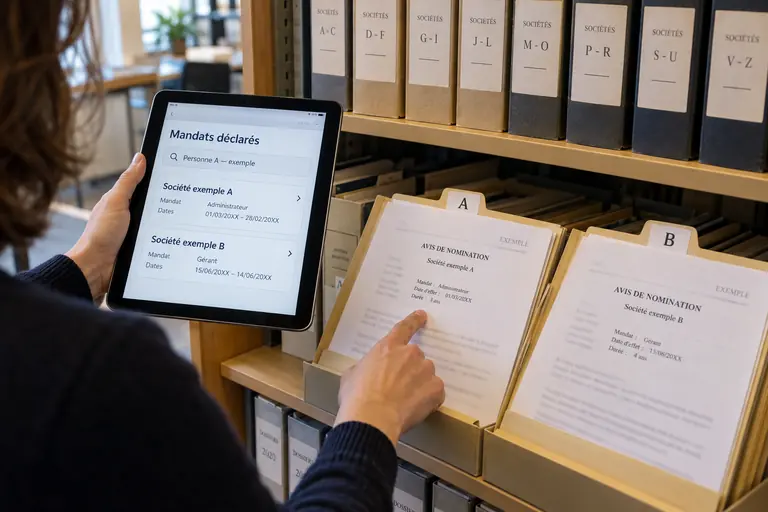
Palencia commercial register company records are the legal memory of local business: a file for each inscribed company, kept by the provincial mercantile registry and updated only after a registrar reviews the supporting deed. It states the name, legal form, address, purpose, administrators and deposited accounts of the firm. Banks, suppliers, notaries and customers use it to avoid dealing with a phantom or an unauthorised signatory. It is deliberately limited, because it excludes private personal information, informal commercial arrangements and any opinion about whether the company is a good risk.
A small province with a diverse base
Palencia is a modest province in Castilla y León, with a capital of the same name and several agricultural towns. Its economy combines cereal farming, food processing, metalworking, the automotive supply chain and a notable tradition of Romanesque heritage that supports tourism. For the registry, this results in a manageable number of companies, many of them family-owned and long established. A smaller volume does not make the file less rigorous. The same legal rules apply as in larger provinces, and the same documents are issued.
If anything, local registrars are familiar with the main businesses of the area, which can make routine dealings smoother, although each decision still depends on the documents presented. Because businesses are often rooted in a single community, it is common that several companies share an owner family. Cross-checking administrators across files can reveal these links. Seeing the same names in different entities is normal in family firms, and it tells you that a problem in one company may affect its relatives.
Flour mills, pasta makers and producers of preserved vegetables have deep roots in the province, and they illustrate how a long-established family firm can sit behind a modest-looking company name. Local chambers of commerce and business associations can explain which procedures apply to start-ups in the province, and they sometimes organise information days with registrars and notaries, which is a useful way to meet the officials who handle the paperwork behind each company.
Information that every sheet contains
The sheet starts with identification: name, tax number, legal form and date of start of activity as stated. It continues with the registered address and the corporate purpose. These basic facts allow you to check that the entity you are dealing with matches the one in your contract. Next come the people. Administrators and attorneys appear with their roles and with the manner in which they may act. A person who claims to represent the company but is absent from this part of the file may still be an employee with a delegated task, which is not necessarily wrong, but it means you should look for proof of the delegation.
Finally, the sheet notes the events affecting the company: capital changes, mergers, dissolution or insolvency declarations where they are recorded. If you find an entry about a judicial procedure, ask a lawyer to explain its effects. The wording is technical, and its practical consequences for a creditor or customer can be significant. A second example concerns suppliers of agricultural inputs. A farmer who is offered credit by a seed or fertiliser company can check that the company is active, find out who administers it and see whether its accounts have been deposited, which provides some reassurance before ordering large quantities for the season.
Asking the registry for what you need
There are several channels: attending the office, writing to it, or using the electronic services that registrars offer collectively. Choose the one that matches your timetable and the document. If speed matters, an online request is often convenient, while a personal visit allows you to ask questions about unclear points. Specify exactly what you want. A note is the lighter option, a certificate the formal one, and deposited accounts a separate item. Telling the registry staff what you intend to do with the document helps them to point you toward the right one, and avoids buying a paper that will not satisfy your counterparty.
Be ready to wait for some formal documents, especially when a certificate requires the registrar's signature. Plan around that when you are preparing a closing date, and avoid requesting everything on the last day. For any request, record the reference and issue date, since you may need to prove later what you knew and when. People who work for registrars often suggest asking a precise question, such as whether a named person is currently an administrator, since a focused request gets a more useful answer than a vague one.
What can go wrong when searching
Name confusion is the most frequent problem. Two companies may share a name apart from a word or a form abbreviation, and the one you want may be in a different province. Always check the tax number and the registered address before relying on the data of a match found by name. Another issue is the type of entity. Cooperatives, associations, foundations and agrarian bodies are registered elsewhere, so a search in the mercantile registry will not find them. This is particularly relevant in a rural province, where farming cooperatives form a significant part of the economy.
A third pitfall is timing. A deed signed last week may not yet be inscribed, so the sheet will show the previous situation. When a transaction depends on that deed, ask for evidence that it was presented to the registry and, if possible, for the registrar's confirmation of filing. Another frequent mistake is to rely on an email signature or website footer as proof of a company's identity. Those details are written by the company itself, and the registry sheet is the neutral place where the name, number and address can be verified independently.
Using the record alongside other sources
For a complete assessment, combine the registry with other documents. A credit report shows payment behaviour; a tax certificate shows compliance with obligations; the property registry shows real estate and charges. Each answers a different question, and none replaces the others. If you are an investor or a buyer from abroad, consider that Spanish formalities differ from those in your own country. Terms like administrator, attorney and sole shareholder do not map exactly onto foreign equivalents. A bilingual professional can explain these differences and prevent misunderstandings in negotiations.
Keep a tidy record of what you obtain. File the documents with the date, the channel used and the person who requested them. If you later need to demonstrate that you acted with diligence, such a record is persuasive, and it also simplifies the next verification of the same company. Law students, notaries' assistants and trainee gestors often learn the language of registry sheets in provincial offices like this one, precisely because the volume is manageable and staff are accustomed to explaining unfamiliar terms to visitors.
When a Palencia company changes hands or closes
Sale of a business in a small province often happens quietly. The owners agree, a deed is signed and, if the company changes its administrators or address, the registry is asked to inscribe the changes. Observers who track such entries can see transitions within a short time, which is valuable for suppliers who want to know whether they will be dealing with new management. Closing a business is a formal process. The partners decide on dissolution, appoint liquidators, settle debts and finally ask for cancellation.
If any step is skipped, the sheet may remain open for years, giving the impression of an active firm. A sudden stop in deposited accounts together with an unchanged address is a typical sign of such a dormant company. Creditors who learn of a dissolution should act promptly. The liquidators are responsible for paying known creditors in the order the law sets, and claims presented late can face difficulties. A short consultation with a lawyer can clarify which documents to send and which deadlines apply to the case.
Frequently asked questions
Who can ask for information about a Palencia company?
The mercantile registry is public, so anyone with a legitimate interest may request information on inscribed companies. You may be asked to identify yourself or to state the purpose, depending on the channel. The data that you receive must be used responsibly and in line with data-protection rules.
Why is a local cooperative not showing up?
Cooperatives are generally kept in their own register rather than the mercantile one, as are associations and foundations. If your search does not return a result, check what legal form the organisation has and ask which registry holds it. The absence of a mercantile file does not mean that the entity is not real.
Should I rely on a note issued some months ago?
Not for an important decision. A note describes the file on the day of issue, and later appointments, capital changes or address moves will not appear. Request a recent document before signing, and ask the company directly whether any act is pending inscription.