
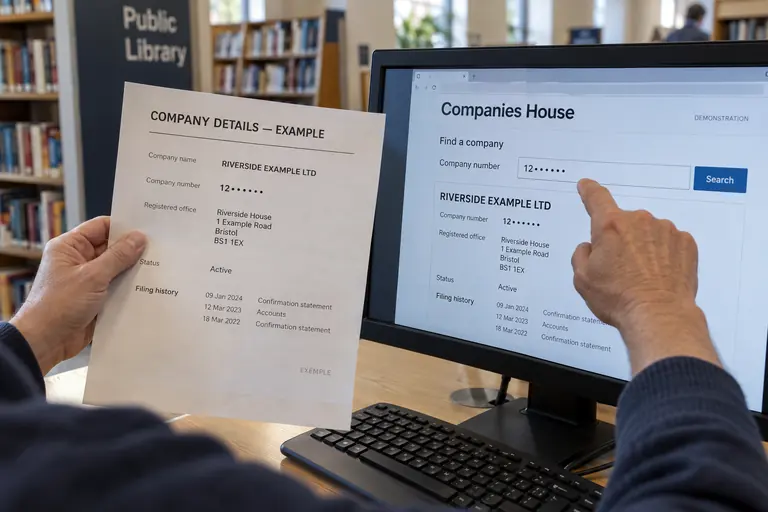
León commercial register company records raise a simple question: what do they actually prove? The answer is the legal identity of a business, as held by the provincial mercantile registry. Each file shows the firm's name, legal form, registered address, corporate purpose, administrators and deposited accounts, all examined by a registrar before entering the sheet. The system exists so that suppliers, lenders, buyers and public bodies can rely on a common, official source instead of statements made by the company itself, while sensitive personal information remains protected.
Where León sits in the Spanish registry system
Spain organises its mercantile registries mainly by province, and each has its own registrar and its own files. León belongs to Castilla y León, a region with several provincial registries that work independently of one another. A company is recorded where its registered address lies, not where its customers are, which matters when a business sells widely but has its legal seat in the province.
Above the provincial offices stands the central registry in Madrid, which handles reservations of company names and keeps a collection of nationwide information. It does not replace the local office. When you want the detailed history of a León company, the provincial file remains the primary source and the one that issues certificates. The professional body of registrars also offers coordinated electronic services, so that a request can be sent without going to the counter.
Behind the screen, however, the same legal rules apply, and the answer you receive reflects what the competent office has inscribed. Foreign readers sometimes expect a single national list of companies. Spain has a central registry for certain data, but the detailed sheet of a León business is held locally, which is why knowing the registered address comes before anything else when you plan a search. A mistaken province means a wasted request.
Mining, energy, agriculture and the shape of local firms
The province has a long industrial history linked to mining and energy, and today its economy also includes agri-food production, wine in the Bierzo area, tourism along the Camino de Santiago and a growing services sector. Company files in the registry therefore range from small family-owned hostels to larger industrial limited companies and subcontractors working for major groups. Many local firms are limited companies with a handful of partners, and plenty of professionals work as individual entrepreneurs without a company at all. Individual entrepreneurs may choose to be inscribed, though in most cases the law does not oblige them.
When you cannot find a trader in the register, ask whether he or she is a self-employed person rather than a corporation. Cooperatives, mutual societies and agrarian transformation societies are common in rural settings and are kept in their own registers. That is why a negative result at the mercantile office should lead you to ask what type of entity you are dealing with, instead of assuming that nobody stands behind the name. The Bierzo wine houses and the small producers of cured meats around the province often operate as limited companies, so a sheet can be a useful starting point when you are preparing a purchase of bottles or pallets.
Asking for a note, a certificate or a copy of accounts
A simple informative note gives a condensed view of the sheet and suits a quick check. A certificate carries the registrar's formal assurance and is what banks, courts and administrations usually demand. If you intend to rely on the paper in a legal setting, the certificate is the safer route even though it takes more formality to obtain. Accounts deposited by capital companies can also be requested, subject to the rules on access. They provide balance sheets and results as declared by the company.
The registrar verifies that the filing meets formal requirements, so the figures should be read as management's own statement and not as an audited judgement, unless an auditor's report is attached. You will need to identify the company precisely, ideally by tax number. Charges for each document depend on its type and the channel, so confirm current prices before ordering several items. Keep each paper with the date of issue in mind, because a later change in the file will not appear in a document that has already been produced.
Starting a company and recording changes in León
The usual route to a new capital company starts with a name certificate, continues with a deed signed before a notary and ends with inscription at the provincial registry. Until inscribed, the company is in formation, and those acting for it can carry personal liability under rules that are worth understanding before signing anything. After incorporation, many events are recordable: new administrators, a change of corporate purpose, a share capital adjustment, a merger or a move of the registered address. Each normally needs a public deed.
A registrar may point out defects, and correcting them is part of ordinary practice rather than a sign that the operation has failed. If a León company relocates to another province, its file is transferred to the registry of the new address. During the transition there can be a gap during which information appears in two places. In such cases, ask both offices or the company itself for a clear statement of where the current record is kept. Acquiring a business in León normally means checking more than the sheet, yet the deed of incorporation and later amendments remain the foundation for understanding what you would inherit.
Interpreting warning signs in a company file
Some signals deserve attention. A closed sheet after missing accounts, a company declared dissolved, an administrator who changes constantly or a registered address that clearly does not match the activity can all merit questions. None proves wrongdoing, but together they help you decide how much trust to place in a new commercial relationship. The file is also useful for confirming who has authority. Powers of attorney may be inscribed with their scope, and some require two signatures acting jointly. If an employee presents a contract and says that he can sign alone, the register can show whether that is true, and that single check prevents many later disputes.
What the file cannot reveal is behaviour: late payments, quality complaints or informal arrangements. For those, speak to other clients, request references and, if the sums are large, order an independent commercial report. A combined approach gives a fairer picture than any single source. Journalists, researchers and students may also have legitimate reasons to consult company files, for example when studying how the local economy has changed. They should state their purpose, respect personal data and recognise that the registry offers legal facts, not interpretations of how well local industries are doing.
Using León company records when buying or selling a business
A buyer examining a León company usually begins with the sheet and then asks for the underlying deeds. The sheet confirms the legal basis, the name and the administrators, while the deeds explain rights attached to the shares, restrictions on transfer and special majorities required for important decisions. Reading both prevents a surprise after the contract is signed. Sellers also benefit from a clean file. If the registered address is outdated, an administrator's appointment has expired or accounts are missing, buyers will ask for explanations and may lower their offer.
Putting the register in order before starting negotiations is a practical step that shortens the process and avoids doubts about the legal health of the firm. Finally, remember that the record covers only the company. Debts of the owners, personal guarantees given to banks and informal promises to employees are outside it. A lawyer familiar with León practice can list the additional enquiries that suit the size and sector of the business, so that the decision does not rest on a single document.
Frequently asked questions
Is the León company file open to anyone?
The mercantile registry is public, so those who have a legitimate interest may obtain information about registered companies. Not every personal detail is disclosed, and the extent of what you receive depends on the document requested. Using the information must also respect data-protection rules and the purpose for which it was requested.
Why can't I find a local association in the mercantile register?
Associations, foundations and cooperatives are generally recorded in their own registers rather than the mercantile one. A search that finds no result may therefore simply point to a different registry. Identify the legal form first, then look in the matching register or ask the organisation which one holds its inscription.
How recent is the information on a note or certificate?
It describes the file on the day the document is issued. Events that have occurred but have not yet been inscribed, such as a very new appointment, will not show. If you need certainty about a recent change, ask the company for the deed and the proof that it was presented for inscription.