
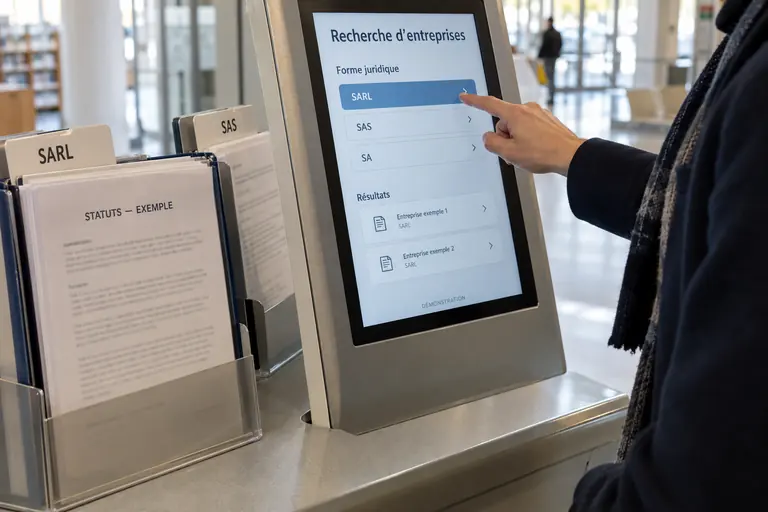
The Zaragoza commercial register and its company records form the legal file of every business with a registered office in the province, from logistics operators to car-parts makers and family shops. Part of Spain's provincial network of mercantile registries, it is run by a registrar who examines each deed before entering it. The sheet of a company lists its name, address, purpose, capital, administrators and later changes, and the public may consult it. Entries are presumed accurate toward third parties, which gives lenders and suppliers a firm basis.
One of three offices in Aragon
Aragon has three provincial mercantile registries, one each for Huesca, Teruel and Zaragoza. The Zaragoza office is by far the busiest because it serves the capital of the region and the most heavily industrialised area. A company whose registered address is in Calatayud, Ejea de los Caballeros or the city itself is recorded there, while a company based in the other provinces is recorded in its own office.
A registrar heads the office. This is a legal professional who qualifies every deed, checking that it respects the law and matches earlier entries, and who is accountable for the decision. That examination is what separates the registry from a mere archive. It also explains why the presumption of accuracy attached to the entries is accepted by courts and public bodies.
The office should not be confused with the chamber of commerce, which is a corporation offering services and networking to firms, nor with the property registry that deals with land and buildings. Each plays a distinct role, even if the same business may deal with all of them in a single transaction, such as buying a warehouse through a company.
For newcomers, the practical lesson is that the legal address, not the shop window, determines where to look. An entrepreneur who opens premises in the city but keeps the company seat in a small town of the province will still be found in this office, whereas a firm with premises here and a seat in another province will not.
Logistics, industry and services
The city sits between Madrid, Barcelona, Valencia and the Basque Country, and that position has turned it into a major logistics centre with large platforms for storage and distribution. Many operators there are local branches of national or international groups, so the register frequently shows entities controlled from elsewhere, with directors who may be companies or professionals from other regions.
Manufacturing is also strong. Vehicle production, components, machinery, food processing and renewable-energy equipment provide a steady flow of registrations, modifications and accounts. For suppliers wanting to work with these firms, a recent sheet can confirm the legal name, the signatories and the capital before negotiations begin.
Small businesses fill the rest of the landscape: shops, workshops, agencies and professional firms, many of them limited companies with two or three partners. Their sheets are short, but they are as legally valid as those of major corporations. Treating a modest sheet with the same attention as a large one is a good habit when checking a counterparty.
Public contracts bring another use of the register. Companies tendering for public work are routinely asked to prove who represents them, and a certificate showing the powers of the signatory is a standard attachment. Businesses that keep their entries up to date find these procedures faster than those that must first regularise outdated appointments.
Reading the entries
Inscriptions are cumulative. The first entry records incorporation and sets out the denomination, legal form, registered office, corporate purpose and starting capital. Later entries add changes in administration, powers granted, increases or reductions in capital, transfer of the registered office and structural operations like mergers or splits. The reader follows the story in order.
Pay attention to the clauses on representation. They indicate whether one administrator can bind the company alone, whether two must sign jointly or whether a board decides. This information protects third parties from signing with someone who has no authority. It is especially valuable for foreign buyers who are used to different rules on corporate signatories.
Equally useful are the dates. A change of director recorded last week may not have been communicated to your contact, and a company that moved its seat to another province will no longer be found here. If a search yields a sheet that looks outdated, ask for a fresh note and compare the tax number with your documents.
Getting a note, certificate or accounts
For an informational overview, order a simple note. For formal proof, order a certificate, which the registrar signs. The first is quicker and suits internal checks, while the second is what a bank, notary or court will often require. If you are unsure, ask the recipient which one it accepts before paying for either.
Annual accounts are requested separately and show how the company reports its situation. They are valuable for comparing years, but small firms may file simplified statements with less detail. Absence of a filing deserves a question to the company and not an automatic conclusion of irregularity.
The electronic channels of the registrars' professional body make it possible to file requests from abroad. Charges and delivery times vary by product and are updated, so confirm them on the official service on the day. Provide the exact name or the tax number so that the right sheet is retrieved.
Keep in mind that a note shows the situation at the moment of issue. If a long negotiation follows, request a fresh one before closing so that any intervening change of director, address or capital is visible to you and to the other parties around the table.
Using the record in cross-border dealings
Foreign investors often check a Spanish counterparty through the register before wiring money. The sheet confirms existence, address, capital and signatories, and the tax number matches the one on the invoice. Doing the check takes minutes and removes the most common risk, which is paying an entity that is not the one named in the contract.
Documents for use abroad may need a translation and legalisation. The requirement depends on the destination country, so ask the foreign recipient what form it expects. A sworn translation prepared from a complete, legible certificate is usually the smoothest path, and it avoids repeated requests to the registry.
Remember that the register shows the company but not the entire group. For a complex structure, you may need to search the registers of other countries where parent companies are located, using the names and identification numbers that appear in the Spanish entries as your starting points.
When the recipient is a foreign bank opening an account for a Spanish subsidiary, it will often ask for both a certificate of registration and evidence of the powers of the directors. Prepare these together so that the bank does not return to you with a second request.
Frequent mistakes
One common error is searching for a trade name instead of the legal denomination. Shops and brands in the city centre often use a commercial sign unrelated to the registered name. Look at the invoice footer or the contract header to find the legal name and tax number, and use those for the search.
Another is assuming that all businesses in the province are in this office. A firm that operates a warehouse here but has its seat in Madrid or Barcelona is recorded there. Competence follows the registered address, so find it first and then choose the office.
A third is treating the sheet as a certificate of quality. It is a statement of legal status. Combine it with accounts, insolvency notices and references, and keep a dated copy of whatever you obtain. If a dispute arises, that copy shows what information was available when you made your decision.
Frequently asked questions
Do Huesca and Teruel companies appear in the Zaragoza register?
No. Each Aragonese province has its own registry, and the deciding factor is the registered address of the company. A firm based in Huesca or Teruel is filed there, even if it operates warehouses or shops in Zaragoza. To find it, search the office of the province where its legal seat is located.
How can I be sure I am looking at the right company?
Use the tax identification number from an invoice or contract rather than relying on the name alone. Similar names are common, and shop signs often differ from the legal denomination. Then compare the registered address and the date of incorporation with your documents to make sure that they match.
Is the chamber of commerce the same as the commercial register?
No. The chamber of commerce is a corporation that provides services and representation to businesses, whereas the commercial register is a public legal registry kept by a registrar. Only the register holds the entries that prove a company's legal existence, management and capital in Spain.