
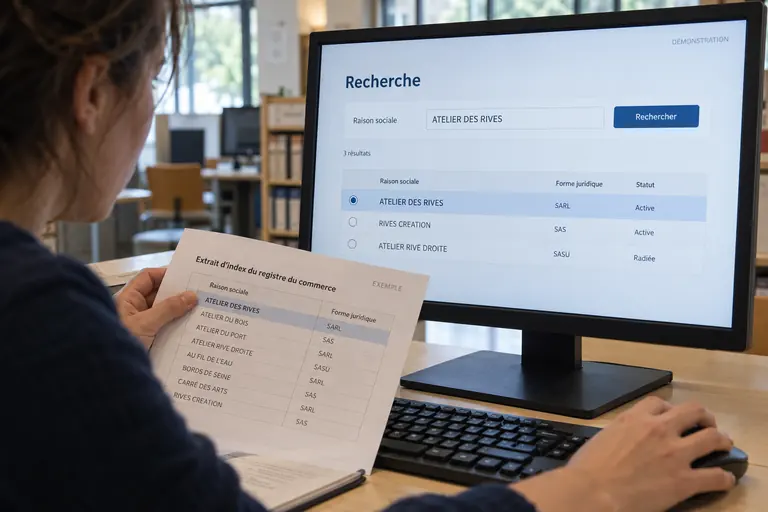
Pontevedra commercial register company records quietly hold the legal facts behind every limited company in the province. The mercantile registry stores them after a registrar has checked each deed, and the result is a sheet with the firm's name, legal form, registered address, activity, administrators and filed accounts. Fishing companies, shipyards, car-part makers and shops all appear in the same structure. The records answer questions of identity and authority with official weight, yet they say little about trading quality, personal finances or matters outside the company's legal life.
A coastal province with industry, fishing and trade
Pontevedra stretches along the Atlantic coast and the Rías Baixas, and its economy has several strong pillars: fishing and seafood processing, canning, shipbuilding and repair, the automotive cluster around Vigo, granite, and a thriving retail and logistics sector. The registry therefore holds files for firms ranging from small boat owners to substantial industrial companies with hundreds of employees. Vigo is the largest city in the province and a major economic centre, so many people assume that its companies are registered in a separate office. Whether that is the case depends on how the registry service is organised, and it is worth confirming which office covers a given registered address before ordering documents.
A request sent to the wrong office is a common cause of delay. Maritime activity adds specialised records. Vessels have their own registration system, distinct from the company file, and concessions or fishing rights are handled by administrative bodies. The mercantile registry tells you who the company is and who runs it; it does not give a detailed account of the boats or licences it uses. The canning and seafood-processing plants along the coast frequently supply large retailers abroad, so their legal identity is often checked by buyers in distant countries.
Reading administrators, powers and corporate purpose
The administrators' section shows who manages the company, whether through a sole administrator, joint administrators or a board. It also shows how they may act. Where two signatures are required, a contract signed by one person alone may not bind the company, and noticing this beforehand can save a dispute later on. Powers of attorney can be inscribed too, with a description of what the attorney may do. A manager may be authorised to sign ordinary contracts but not to sell property or borrow large sums. Compare the powers recorded with the transaction in front of you, and ask for a new document if the scope seems doubtful.
The corporate purpose lists the activities the company may carry out. It is often written broadly, covering many sectors, so it is a weak guide to what the business actually does. A company with a wide purpose may in reality operate only a single bar. Use the purpose to check that your transaction falls within what the articles allow, and nothing more. A real-world example is a buyer who receives a purchase order signed by a person described as a director. The sheet may show that the company is administered by a board in which two signatures are required, so the order needs confirmation from a second person before it can be treated as binding.
How to obtain notes, certificates and copies of accounts
For a quick check, ask for a simple informative note. It condenses the sheet and is perfect when you want to know whether a supplier is active and who administers it. For official use before a bank, notary or court, ask for a certificate, which the registrar issues under his or her responsibility and which carries greater formal weight. Requests may be made in person, by post or online through the registrars' professional services. Give the tax number whenever possible. If you only have the name, include the legal-form ending and consider the Galician spelling of places, such as Vigo or Marín, because different spellings circulate in business documents.
The accounts deposited by capital companies can also be obtained. They disclose balance sheets, results and notes, as declared. Because they are the company's own statement, treat them as a starting point and compare several periods. Prices and delivery times depend on the item and on the channel selected, so confirm them when ordering. When the same company supplies several buyers, each of them can request a note independently, so there is no need to rely on a copy forwarded by the seller. Obtaining your own paper from the registry is the cleaner way to avoid forged or outdated documents, and it takes only a short time.
Changes over time and what the sequence tells you
A company file is a chronicle. The first entry records the founding deed, and later entries add every authorised change. Reading the sequence can reveal growth, such as a series of capital increases, or tension, such as repeated replacement of administrators within a short time. Neither pattern is conclusive, but both suggest questions to put to the owners. Mergers, splits and conversions leave their own traces. When one company absorbs another, the absorbed entity's sheet is cancelled and its activity continues under the surviving firm.
If you are looking for a supplier that seems to have vanished, the explanation may be that it was merged and now trades under a different name. Relocations matter as well. If a company moves its registered address to another province, its sheet moves with it, and the old registry will no longer be the right place to ask. The mismatch can make a company look missing when it has simply changed office. A creditor who sees a merger entry for the supplier it has dealt with for years can use it to redirect any pending claim to the surviving company.
Practical cautions before relying on the record
Never treat a registry document as a credit rating. It says nothing about whether invoices are paid on time or whether the company has pending claims. For commercial credit, combine the file with trade references and independent reports. A well-organised file can still hide a business in difficulty, and a sparse one can belong to a perfectly healthy firm. Check dates carefully. The document shows the position on the day of issue, and events between that day and your transaction are not covered. For significant deals, ask for the most recent version and verify directly with the company that no important act is waiting to be inscribed.
Respect data protection when handling the information. Names of administrators are part of mercantile publicity, but you should use them only for the purpose that justified your request. Where a legal consequence is unclear, a local lawyer or gestor can interpret the file and explain which further documents to request. Visitors to the Rías Baixas who rent holiday homes or book boat excursions may also find the registry useful, although most such arrangements are small. For larger tourism investments, the sheet is a first filter that should be followed by legal advice on licences, zoning and environmental rules.
Shipyards, canneries and car parts: what outsiders ask the registry
International buyers of seafood or canned products usually want to confirm three things: that the exporting company exists, that the person negotiating is authorised and that the company has a history of filing accounts. The file answers all three. It cannot confirm hygiene standards or quotas, which are checked through other bodies and by the buyer's own audits. Suppliers to the automotive plants near Vigo are often medium-sized industrial companies with long-standing relationships.
Procurement departments review their sheets when onboarding, looking for stable administrators, sufficient capital and regular deposits of accounts. A gap in those basics can delay approval as a supplier even when the product is excellent. Shipyards and repair businesses may operate through several companies, one for the yard, another for equipment and another for property. Understanding the relationship between them requires reading the files of each and, where necessary, asking the group for an organisation chart. The registry shows the pieces; the assembled picture takes a little more work.
Frequently asked questions
Is Vigo covered by the same registry as the province?
That depends on how the registry service is organised for the registered address in question. Because of the size of Vigo's business community, confirm which office covers the company before ordering anything. The company's registered address determines the competent registry, so start from the address on the deed or the invoice.
Can the register show which vessels a fishing company owns?
No. Vessels are recorded in their own maritime registration systems, separate from the company file. The mercantile sheet shows the company itself, its administrators and deposited accounts. To confirm a boat, ask the owner for its documents and check them with the maritime administration that issued them.
How do I know a document is current enough?
Look at the issue date, because the paper reflects the file only as of that day. For important operations, request a new document shortly before signing and ask the company whether recent deeds have been presented. Inscription can take time, so facts may exist before they appear.