
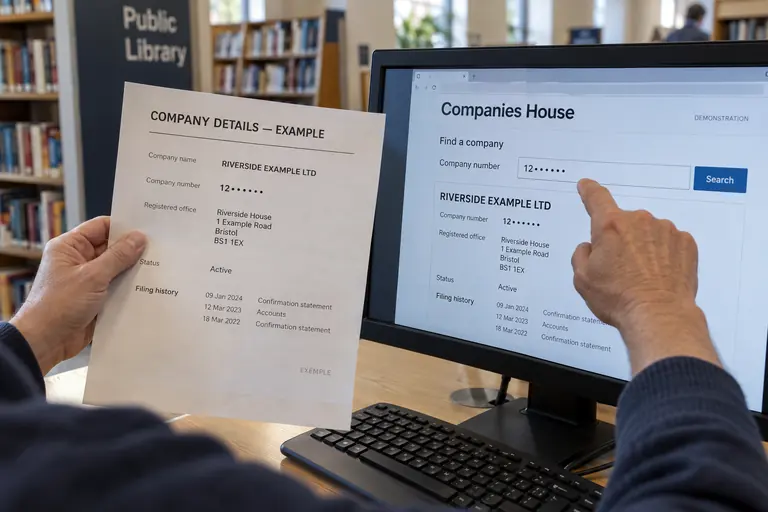
Uzbekistan's company register and business records form part of the state registration of legal entities, a procedure now delivered mainly through the public services agency and online government portals. Once a business is registered, it appears with a name, legal form, address, founders and manager, and it receives a taxpayer identification number used by banks and tax offices. Limited liability companies dominate the market, followed by joint-stock companies and private enterprises. Documents are normally issued in Uzbek, and Russian remains common in business use.
State registration through public service channels
In Uzbekistan the creation of a legal entity is a matter of state registration. Over recent years, the government has simplified the procedure, moving it towards public service centres and the unified online portal for interactive services, so that founders can often submit applications and receive confirmation without visiting several offices. The body that handles registration works within the justice sector and uses information that is shared with the tax authorities.
When an entity is registered, its data flows to the tax system and to statistical bodies, which means that the company is recognised across administrations from the first day of existence. A registration decision is based on the application, the founding documents and proof that the legal address exists. Names must not duplicate those of existing entities, and certain words that imply a special status, such as bank or state, require approval from the relevant authority. Because procedures are reformed frequently, specific forms, deadlines and portal functions change.
Anyone planning to register a business or to obtain documents should check the current arrangements with the agency or with a local lawyer rather than rely on older descriptions. Regional differences are smaller than in larger federal systems, because registration is national, but companies in Tashkent, Samarkand, Bukhara or the Fergana Valley may still find that local service centres vary in how quickly they respond. Choosing the centre that handles the largest volume of business requests often shortens the process.
Forms of legal entity in practice
The most widespread vehicle is the limited liability company, known locally by the abbreviation MChJ. It is favoured by small and medium businesses because it separates the owners' personal assets from the firm and can be set up with a relatively simple structure and a modest set of founding documents. Joint-stock companies are used for larger ventures and for those that plan to issue shares, including state-owned enterprises that have been corporatised.
They are subject to additional governance requirements, such as a supervisory board and annual disclosure of certain information. Private enterprises, farms and individual entrepreneurs are also recognised. A person who operates as an individual entrepreneur is not a company and bears personal liability, so a contract signed with such a person has different consequences than a contract with an MChJ. Foreign investors may establish companies, branches and representative offices under the investment legislation.
A representative office has no right to carry on commercial activity itself, and its registration record shows this limited role, which is useful to know when reading an extract. Foreign-invested enterprises can be wholly owned by overseas investors in most sectors. The charter fixes the share of each founder, and the registry entry shows the founders' names, so a reader can see directly whether a company is local, foreign or mixed in ownership.
Taxpayer number, extracts and other key documents
Every registered entity receives a taxpayer identification number, abbreviated STIR in Uzbek, which is the most reliable identifier for contracts, invoices and customs documents. When two companies have similar names, comparing this number resolves most doubts quickly. The registration certificate has long been supplemented or replaced by electronic extracts, which confirm the entity's details and can be verified online through the issuing platform. If a counterparty presents a printed certificate, ask whether an electronic version with a verification element can be provided.
Some activities require licences or permits. The authorities have reduced the list of licensed activities in recent years, but areas such as banking, insurance, medicine, education, transport and construction remain regulated, and a registry entry does not replace the permit. Names are written in Uzbek, in Latin or Cyrillic script depending on the document, and transliteration varies. Rely on the numbers and the registered address when comparing documents, and request an official translation when documents will be used abroad.
Searching and requesting information
Basic information on registered entities can often be checked through government electronic services by entering the tax number or the name, although the data available to the public differs from what the owner can see in a personal account. The platform may show status, form, address and manager. For a formal extract, the owner or an authorised representative can request it through the portal or at a service centre. A third party usually needs the company's consent or a lawful basis, so the easiest path is to ask the counterparty to share a freshly generated document. Foreign users may need help with navigation and language.
Local law firms, accounting offices and business associations routinely deal with these requests, and a power of attorney lets them act without the foreign party travelling to the country. Documents for use outside the country are translated and often apostilled, since Uzbekistan applies the apostille convention. The receiving institution decides what it accepts, so check its requirements before ordering translations or certifications. A company that has been liquidated or reorganised remains visible with its status changed, so a search that returns a hit is not proof that the business is active. Look at the status field and, if needed, request a certificate stating the current standing of the entity.
What stays outside the public record
Details about the ultimate beneficiaries of a company have become more important in recent years, as the country has strengthened rules on transparency and anti-money-laundering. Even so, access to such information is limited to the authorities and certain obliged entities, and ordinary users may not see it. Financial statements and tax data are confidential in general. Joint-stock companies and certain public-interest entities have disclosure duties, and listed companies publish information through the securities market channels, but the typical LLC does not publish accounts.
Court cases and enforcement proceedings are held in separate systems. Some information on claims can be found in public court databases, yet it is organised by case rather than by company, and a search requires accurate names and numbers. If a significant transaction depends on a deeper view of the counterparty, ask for audited accounts, a tax clearance statement and bank references, and consider commissioning a local legal opinion. These documents complement the registry and close its gaps.
Prudent habits when dealing with Uzbek companies
Request the current electronic extract, the charter, the tax registration and any licences, then compare the numbers, names and addresses. Confirm that the person who signs is the director shown in the record or holds a valid power of attorney that has been notarised. Look for consistency in the stated activities. A company registered for one type of work cannot easily deliver something unrelated, and a mismatch between the registered scope and the contract may signal a problem or call for a charter amendment.
Check the premises where practical. A local representative can confirm that the company is present at its registered address, and a brief visit often reveals more than a stack of certificates, especially in the case of newly formed businesses. Maintain written records of your checks and refresh them before major steps such as advance payments. Registration data can change quickly in a country with an active reform agenda, and an updated extract is a cheap safeguard.
Frequently asked questions
What is the STIR in Uzbekistan?
The STIR is the taxpayer identification number assigned to registered entities and individuals. It appears on contracts, invoices and customs papers and links a company to the tax system. When names are similar, comparing the number is the quickest and most reliable way to confirm identity.
How are companies registered in Uzbekistan?
State registration is handled by the public services agency, with applications processed through service centres and the government's online portal. The data is shared with the tax authorities and other bodies. Because procedures are reformed often, check the current requirements with the agency or a local lawyer.
Can I verify an Uzbek company's extract online?
Electronic extracts can usually be verified through the issuing government platform, which is preferable to relying on a printed copy. The details visible to the public may be limited, so ask the company to share a freshly generated extract and confirm the number and the manager.