
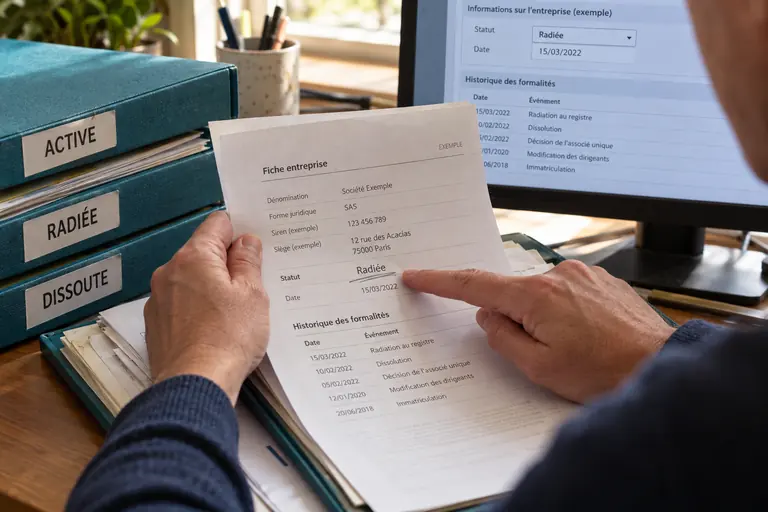
Iraq's company register and business records sit in two layers. At federal level, the Companies Registrar attached to the Ministry of Trade registers companies under the Companies Law, in Arabic, and issues certificates of incorporation. In the Kurdistan Region, a separate registration system operates under regional law and administers its own companies. Each file lists the name, legal form, capital, owners or partners, managers and address. Because institutions have faced disruption and reform, foreign readers should confirm which authority holds a given record and how recent it is.
Federal registrar and regional systems
The federal Companies Registrar, linked to the Ministry of Trade and based in Baghdad, is the principal authority for registering Iraqi companies. It applies the Companies Law, which was reformed after the political changes of the early twenty-first century to accommodate private investment and foreign participation, and it issues the founding certificate that gives a company legal personality.
The Kurdistan Region has its own institutions and its own rules for business registration, including links to the regional investment authority for projects that qualify. A company active in Erbil, Sulaymaniyah or Duhok may therefore be registered at the regional level, at the federal level or in both. Ask the business which registration it holds and obtain the corresponding certificate.
This dual structure is the first thing a foreign reader should understand. A federal certificate does not automatically settle a question about a regional registration, and the reverse is also true. When documents seem inconsistent, the explanation is often that they were issued by different authorities with different scopes.
Reform has been continuous. Investment laws, rules for foreign participation and administrative procedures have been revised more than once, and practitioners sometimes disagree about the exact current position. If a point is critical, ask the registrar for a written statement or rely on a local lawyer's written opinion that you can keep in your file.
Forms of company and their features
The law provides for several forms. Commonly encountered are the limited liability company, the private and public joint-stock companies, the mixed company with state participation, the partnership and the sole proprietorship. Branches and representative offices of foreign firms are also registered under dedicated provisions, which have been amended over time.
Each form has different rules on capital, governance and liability. Joint-stock companies have boards and shareholders' meetings, while limited liability companies are managed by one or more managers. State-owned enterprises have their own legal basis. Reading the form helps you understand who decides, who is responsible and what documents you should request to confirm authority.
The file normally includes the articles of association, the list of partners or shareholders, the registered office and the objects of the company. Changes need to be registered to be effective. A sequence of amendments can show whether a company has been restructured, moved or recapitalised, and it may point to questions that you should put to the management.
Mixed companies with state participation deserve special care. A government shareholding can mean stronger political backing, but it also brings public-law constraints on contracts, procurement and approvals. Ask who represents the state shareholder, what approvals are needed for major decisions and whether the company's statutes require authorisations that your contract must respect.
Identifiers, numbers and language
A registered company receives a registration number and a certificate with its date of incorporation. Tax and customs authorities issue their own identifiers, and sector regulators add licence numbers for regulated activities. Contracts should quote the registration number, the legal name in Arabic and, where possible, the transliteration used by the company in international trade.
Arabic is the language of the main documents, and Kurdish is widely used in the Kurdistan Region, where some documents are bilingual. Foreign authorities and banks normally require a certified translation, and legalisation may be needed for use abroad. Ask the receiving authority which chain of certification it will accept before paying for documents.
Spelling variation is a recurring problem. Arabic and Kurdish names rendered into Latin letters can differ from one document to another, and many Iraqi companies share common words such as Babylon, Mesopotamia or Rafidain. Rely on registration numbers, addresses and the names of authorised signatories, and ask for written clarification where discrepancies appear.
Obtaining confirmation and certified copies
The most dependable route is to obtain a recent certified copy of the registration certificate and statutes from the relevant registrar, either through the company itself or through a lawyer acting under a power of attorney. A fresh document is more persuasive than an old photocopy, and many banks and embassies will refuse papers that are too old.
Local law firms and consultancies in Baghdad and Erbil can explain which office to approach and which documents it will request. They can also arrange translations and attestation. Choose advisers with a track record, agree a clear scope and ask for copies of everything they file or obtain on your behalf.
Where online services exist, they have often been limited or uneven, so physical visits and formal letters remain common. Allow time for processing, and keep proof of each step. Staff changes, security conditions and administrative reorganisations can slow a request, so build a margin into your schedule.
Sometimes a company will say that its documents were lost or damaged and offer reconstructed copies. This can be genuine, especially after years of disruption, but it calls for care. Ask for confirmation from the registrar that the record exists, and have a lawyer verify that replacement certificates were issued through proper channels.
Beyond registration: licences, security and sector rules
Registration does not authorise every activity. Oil and gas, banking, telecommunications, construction, healthcare and many other sectors require licences from specific authorities, and contracts with public bodies involve tender registrations and tax clearances. Always ask for the permits relevant to your transaction and verify them with the issuing office.
Security and political conditions can affect ordinary commercial life, including access to offices and the movement of documents. These factors do not change what a register shows, but they influence how quickly information can be obtained and how current it is. Seek local advice on practical constraints in the governorate concerned.
Ownership transparency may be limited. Partners and shareholders appear in the records, but nominee arrangements and links to politically exposed persons require extra scrutiny. Compliance teams commonly ask for enhanced due diligence on Iraqi counterparties, so collect supporting documents early and keep them organised.
A sensible verification routine for foreign parties
Ask for the certificate of incorporation, the articles, the latest amendments, the tax number and the names of authorised signatories. Check that the signatory's authority is documented. Compare the data with the contract and bank details, and verify the originals with the competent registrar or through an advisor who can do so reliably.
Record where each document was issued, whether federal or regional, and its date. If you plan to use it abroad, obtain a translation and attestation in the correct order, since errors in the chain can force you to repeat the process and cause delays that jeopardise a closing date.
Last, keep in mind that legislation and practice change, and that this overview is not a substitute for legal advice. Regulations may be amended, offices may reorganise and new electronic services may be introduced. Confirm current rules shortly before acting and keep dated evidence of your checks.
Lastly, consider the practical question of who will enforce your rights if a dispute arises. Contracts with Iraqi companies often include arbitration clauses, choice of governing law and designated courts. The identification of the party in the contract, based on its registration data, is the foundation for any later award or judgment, so accuracy at the start matters.
Frequently asked questions
Which authority registers companies in Iraq?
At federal level the Companies Registrar, linked to the Ministry of Trade in Baghdad, registers companies under the Companies Law. The Kurdistan Region operates its own registration system under regional law. A company may hold registrations in one or both, so ask for the certificates and check which authority issued each.
Are Iraqi company documents available in English?
The main documents are in Arabic, and Kurdish is used in parts of the Kurdistan Region. English versions are usually private translations, not official originals. For use abroad, obtain a certified translation and ask the receiving authority whether legalisation or attestation is needed.
Does registration show that an Iraqi firm may work in any sector?
No. Registration confirms legal existence and recorded details. Oil, banking, telecoms, construction and other regulated fields need separate licences. Ask for the specific permits, verify them with the issuing authority and make sure their scope fits the work you intend to contract for.