
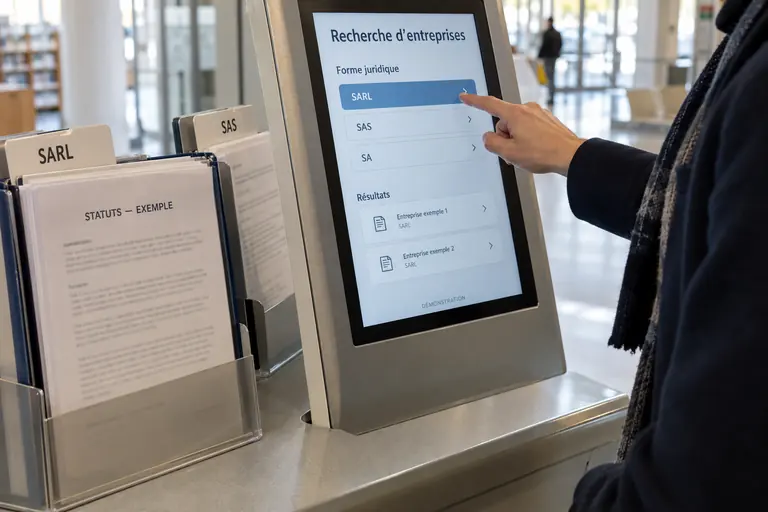
In Toledo, the commercial register and company records make up the official memory of local business life in Castilla-La Mancha. The provincial office of Spain's mercantile registry opens a sheet for each company domiciled in the province and enters its name, address, corporate purpose, capital and administrators. A registrar with legal training checks every deed before accepting it, which is why the content carries weight with banks and courts. Consultation is open to those with a legitimate interest, and a few documents are issued only on formal request.
A registry rooted in a historic province
Toledo is known worldwide for its walled old town, yet the province behind it is a working economy of farms, workshops, warehouses and construction firms. The mercantile registry serves that whole territory, not only the city. A company based in Talavera de la Reina, Illescas or Seseña is recorded in the same office as a souvenir workshop in the old quarter, because competence follows the registered address in the articles.
The office is part of the Spanish network of provincial registries and applies the same commercial code, company law and registry rules that bind every other province. Local colour does not alter procedure. What changes from place to place is the profile of the businesses, and in this province that profile ranges from traditional crafts to modern distribution centres close to the Madrid corridor.
At the head of the office stands a registrar, a public official who has qualified through a demanding competitive process. The registrar evaluates every document before an entry is made and answers for its legality. That responsibility is the reason why a published sheet is trusted far more than a company brochure or a website description.
Crafts, logistics and agriculture in the files
Toledo's identity is tied to metalwork, damascening, ceramics and marzipan, and many of these trades are run by small partnerships or sole traders. The family workshop that sells to visitors may be a company with a registered sheet or an individual who is only registered for tax. The difference decides whether a search of the register will return anything, and it is one of the first things to clarify.
On the northern edge of the province, logistics parks have attracted large storage and distribution businesses serving the capital region. Their local entities are often subsidiaries of national or foreign groups, so the register will show a local company with directors who may themselves be corporations. Reading such a sheet means following the chain of names to the company that actually takes decisions.
Farming also leaves its trace. Vineyards, olive groves, cereal estates and livestock businesses often belong to companies created by families, sometimes to hold land rather than to trade. These land-holding companies appear in the register like any other, and their sheets help confirm who may sell, lease or pledge assets on behalf of the entity.
Tourism adds another layer. Hotels, restaurants, guided-tour operators and shops around the cathedral and the Alcázar trade under names that visitors know, while the legal entities behind them may carry different denominations. Someone wanting to confirm who runs a venue, for instance before booking an event or signing a supply contract, should look for the legal name on the invoice and then search that name in the register.
What a company sheet shows
Every sheet starts with incorporation and then follows the life of the company through dated entries. You will find the denomination, the legal form, the registered office, the corporate purpose and the stated capital. Later entries record the appointment and removal of directors, the powers conferred on managers and attorneys, changes of seat, capital increases and, when the time comes, dissolution and cancellation.
This sequence makes the sheet a reliable timeline. A purchaser can see when a director took office, a creditor can see whether the capital has been altered, and an heir can see whether the company still exists in law. Because entries are dated, disputes about who was in charge on a given day are easier to settle than if one depended on memory or private papers.
There are limits to keep in view. The sheet does not give opinions about financial strength, it does not list every minor contract, and it does not display the private arrangements among partners. It reflects what the law requires to be public. For richer detail, readers combine it with the deposited annual accounts and with publications in the official commercial gazette.
Requesting a simple note or a certificate
The simple note is the everyday document: a summary of the current content, intended for information. It suits a quick background check before meeting a supplier, hiring a contractor or reviewing a lease. It can be requested electronically, and it usually identifies the company, its address and the persons authorised to represent it.
When a bank, notary, court or public authority wants proof, the certificate is the tool. The registrar signs it and thereby vouches for what the books contain, so it carries probative force that an informal extract lacks. Applicants should state clearly the purpose of the request, because the registrar can only issue what the rules allow for that purpose.
Applicants who live abroad can generally apply through the electronic services connected to the professional body of registrars. Charges, formats and timing depend on the type of document and are adjusted from time to time, so confirm them on the official service on the day. If the paper will travel, ask the recipient whether a translation or an apostille is needed before you place the order.
Common reasons a search fails
The first is choosing the wrong office. A business with a shop in Toledo but a registered seat in Madrid is filed in Madrid, and the Toledo registry will have nothing on it. The second is relying on a trade name. Brands and shop signs seldom match the legal denomination, so a search using only a nickname often returns nothing or the wrong company.
The third is expecting a sole trader to be listed. Individuals trading in their own name are normally not entered in the mercantile register, although some choose to register. The fourth is a typing slip in a long name or tax number. A single wrong character can lead to an unrelated sheet, so copy identifiers from an invoice and compare them carefully.
A fifth cause is timing. A company created or modified very recently may not yet show every change, since entries follow the deed after a verification step. When a transaction depends on a new event, ask the company for a copy of its deed and obtain a fresh note close to the date of signing.
Using the record sensibly
A registry sheet answers legal questions: does the company exist, where is it based, who can sign and what is its stated capital. It does not answer commercial questions such as whether orders are delivered on time. Treat it as the first layer of due diligence and add references, accounts and direct contact before committing money.
For visitors and expatriates who plan to buy a business, rent premises or open a branch, the sheet also helps to avoid impersonation. Fraudsters sometimes borrow the name of an established firm, and comparing the tax number and the signatory with the register is a quick way to detect a mismatch before payment is made.
Keep copies of the document you obtained and note the date on which it was issued. Because registrations change, a note that was accurate last month may be incomplete today. A dated copy shows what you knew when you made a decision, which can matter if a disagreement arises later.
Frequently asked questions
Does the Toledo registry only cover companies inside the city?
No. It serves the whole province, so a company based in towns such as Talavera de la Reina or Illescas is recorded there too. What decides the office is the registered address in the articles of association, not the place where staff work or where customers are served.
Is a sole trader in Toledo listed in the register?
Usually not. Individuals who trade in their own name are normally proven through tax and social security records, and only some choose voluntary registration in the mercantile register. Limited companies and public limited companies, by contrast, must be entered, so they are the typical results of a search.
Which document should I use as proof for a bank?
A bank generally asks for a certificate signed by the registrar, because it formally attests what the books contain. A simple note is only informational and is better for background checks. Ask the bank which one it accepts, and confirm any charge and delivery time on the official service.