
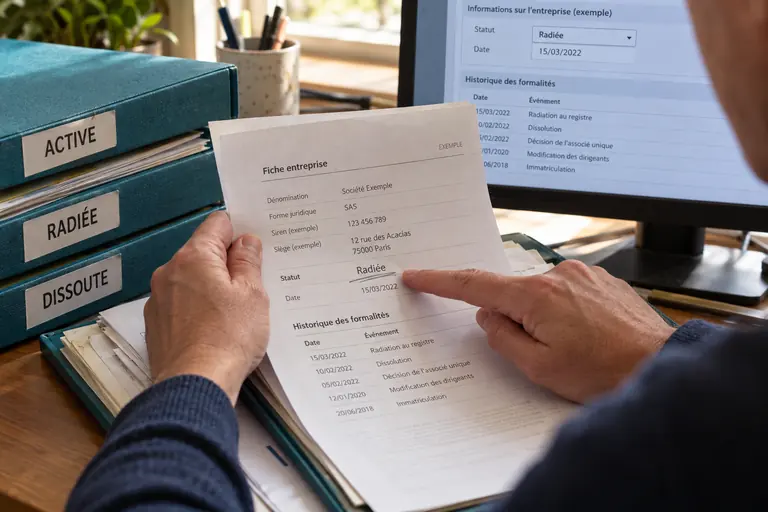
Navarre's commercial register company records give an official picture of each business inscribed in the Chartered Community. Held by the mercantile registry, they list the company's name, legal form, registered address, corporate purpose, administrators and filed accounts after a registrar has checked the underlying deeds. For a counterparty in Spain or abroad, they answer the basic question of who exists and who may sign. They cannot, however, measure how well the business performs, and they leave aside most personal information about the people behind it.
A Chartered Community with its own tax authority
Navarre is a foral community with its own tax administration, a feature that sets it apart from most of Spain. For company records, the practical effect is limited: the mercantile registry follows national commercial law, so the structure of a company file looks the same as elsewhere. Where Navarre differs is in tax procedures, which are handled by the regional authority. This distinction can confuse newcomers. A tax certificate for a Navarrese company comes from the foral treasury, whereas the registry certificate states the commercial data. The two documents serve different purposes, and a bank or a public tender may ask for both. Knowing which institution issues which paper avoids a long detour.
The company's tax identification number, however, works in the usual national format, and it is the best key for a registry search. Once you hold it, the same number can be used with different authorities, even though each of them answers only for its own domain. Practitioners in Pamplona routinely handle both regional and national paperwork for the same client, so a gestor familiar with each system can save considerable effort. An additional practical point concerns subsidies and public support. Navarrese authorities run their own programmes for businesses, and applicants are generally asked to prove legal existence and powers of representation. The mercantile certificate is the standard evidence for that purpose, while tax standing is demonstrated with foral documents.
Basque and Spanish in a bilingual setting
Spanish is the official language across Navarre, and Basque is co-official in the Basque-speaking zone. Company names, addresses and place names can therefore appear in either form, and several towns carry both a Spanish and a Basque name. Pamplona, for example, is also written Iruña, and a person searching by place name may need to try both. Documents are generally issued in Spanish. If you have to present them abroad, ask the receiving institution whether it requires a translation, since a sworn translation into another language is a separate step from any bilingual note on the file.
Pay attention to how the legal-form abbreviation appears, because small spelling differences can alter results in electronic searches. When uncertain, searching by tax number and then comparing the address and activity is more dependable than guessing the precise way a name was written. Basque-speaking areas in the north of the community mean that signs, addresses and even company names can come in two forms, and the register records whichever form appears in the deed.
What businesses are inscribed in the region
Navarre has a strong industrial base, including automotive components, renewable energy, food processing and machinery, along with agriculture in the Ebro valley and tourism linked to the Camino and to the Pyrenees. Companies range from multinational subsidiaries to small workshops, and the register shows them all through the same legal framework. Subsidiaries of foreign groups are common. For them, the file shows the Spanish legal entity, its administrators and its deposited accounts, but not the parent's wider structure, which lies in the home country's own register. If the aim is to understand a group, you will need to consult more than one jurisdiction. Cooperatives are also important in the region's economy, particularly in agriculture, and they have their own registry.
A cooperative may nevertheless have commercial subsidiaries that are recorded as ordinary companies, so a full understanding of a local business sometimes requires looking at several files. Family-owned industrial companies in the Ribera and around Pamplona frequently cooperate with larger groups as suppliers, and their files show the legal base on which those contracts rest. When a business has a long history, reading the oldest entries can be instructive. Names, capital amounts and the original purpose sometimes tell of a different activity from the present one, and recognising such shifts helps you see whether a company has adapted successfully or merely kept its legal shell.
Getting information and documents
Information is available through a visit, by post or electronically via the registrars' services. Two documents are most requested: the informative note, which summarises the sheet, and the certificate, which is the formal evidence issued under the registrar's responsibility. The first fits internal checks; the second fits legal and administrative uses. When ordering, give the tax number if you have it. If not, provide the full name with the legal-form ending, and if a name is common, add the registered address.
A wrong guess often yields no result, and the cost of trying again accumulates across several requests. Fees and delivery times depend on the document and channel, so ask for current conditions before relying on a deadline. Keep each document together with the transaction it supported, and note its issue date, because the file continues to change after you have your copy. A foreign customer who wants to confirm the identity of a Navarrese supplier can ask for the note by electronic means and compare it with the deed received from the supplier.
Accounts, books and the duty to keep records current
Capital companies must file their approved annual accounts at the registry of their registered address. These filings let outsiders view balance sheets and results, which is rare for private firms in many countries. The registrar reviews the filing for formal compliance, not for accounting accuracy. Businesspeople must also have their obligatory books legalised, a step now carried out electronically. Legalisation attests that the books exist and have been opened according to the rules but does not approve the entries.
For that reason, the register can confirm the existence of a minutes book, for instance, without telling you what the minutes say. If a company ignores its filing duty for long, the registry can close its sheet to further inscriptions with limited exceptions. This outcome is a useful red flag. Before relying on a Navarrese partner whose sheet is closed, ask why and obtain a written explanation.
Companies in Navarre that sell abroad often keep accounts in several formats, but the version deposited at the registry is the one the law recognises as the public statement. A buyer who intends to take over a Navarrese company should also ask whether the company has pledged assets, as such charges might be recorded in other registries. Thorough diligence draws on several sources, and the mercantile sheet is where you begin but not where you stop.
Cross-border use and professional advice
Foreign investors and buyers often request registry evidence to support a loan, a purchase or a tender. The certificate, possibly with an apostille, usually fills that role, though some countries or institutions ask for a translation as well. Agree on the exact format with the receiving party before ordering to avoid duplicating the work. The register is not the only Spanish database of relevance. Property sits in a different registry, taxes with the tax authorities, and insolvency proceedings in court records.
Combining sources is the normal approach for any serious verification. When the matter is complex, a local lawyer or gestor who knows both national rules and Navarre's special features can save time. The foral system affects taxes and some administrative matters, and a professional can tell you where it changes the practical steps and where it does not. The information gathered from the register, the tax authority and a credit report can then be set side by side, so that the full picture does not depend on one institution alone.
Frequently asked questions
Does Navarre's special tax regime change the commercial register?
Not in substance. The mercantile registry applies national commercial law, so the content of a company file is similar to that of other Spanish provinces. The foral regime mainly affects tax administration, so tax certificates come from the regional authority, while the registry supplies the commercial and corporate information.
Can I search using the Basque name of a town?
You can try, but results may vary because records usually follow the form written in the deed. If a place has both a Spanish and a Basque name, test both and compare the registered address. A tax number remains the most reliable search key and avoids language issues altogether.
Do I need a certificate or is a note enough?
A note is fine for your own checks, such as seeing who administers a company. A certificate is the formal document for banks, courts or foreign institutions. Ask the party requiring the proof which one it accepts, because ordering the wrong document wastes both time and money.