
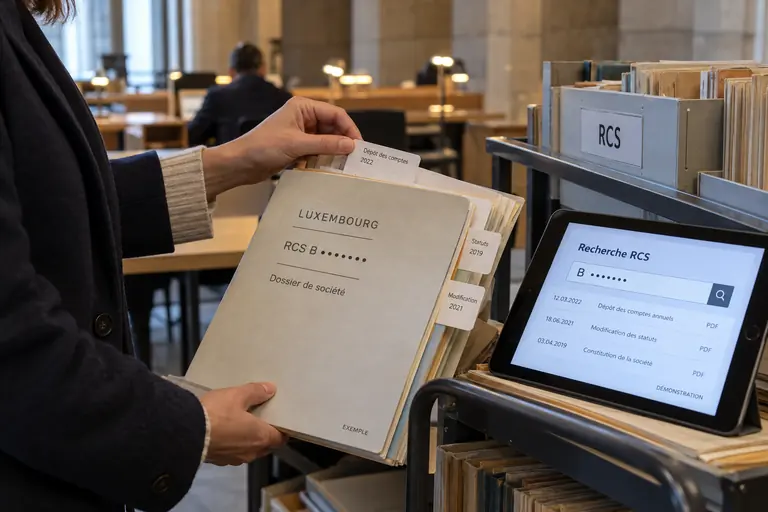
The Alicante commercial register holds company records for businesses domiciled in the province, a Mediterranean territory that mixes tourism, footwear, toys, agriculture and a large community of foreign residents and investors. It is a public register run by registrars under Spanish commercial law, and each company has a sheet that shows its name, address, purpose, capital, administrators and history. For anyone who deals with a company on the Costa Blanca, it is the main and most dependable source of legally reliable information.
Scope within the Valencian Community
Alicante belongs to the Valencian Community, but its commercial register is separate from that of Valencia. Each province has its own office, and a company is entered in the register of the province where its registered address is located. Anyone looking for a firm in Elche, Benidorm, Torrevieja, Alcoy or Denia should therefore search the Alicante registry.
The register applies state law. The Commercial Code, the register regulations and the capital companies legislation govern what is registered and how the registrar examines each filing. Regional authorities have their own powers in tourism, consumer matters and economic promotion, but they do not change the content of a commercial registry sheet.
Alicante's economy has several distinct layers: long-standing industries such as footwear in Elche and toys in the Alcoy area, large tourism and hospitality sectors along the coast, property development and services for foreign residents. The register captures the legal side of all of them, which explains why entries range from very small family firms to companies with international owners.
Seasonal patterns add a final twist. Many hospitality and leisure businesses open and close with the tourist calendar, yet their legal existence continues all year. A closed beach bar is not a dissolved company, and only the registry sheet can tell you whether a business has actually been wound up.
Branches of foreign companies
Many foreign groups operate in the province through a branch, called a sucursal in Spanish. A branch is not a new legal entity, but an extension of the foreign company, and it is entered in the commercial register of the province where it is established. The entry identifies the foreign parent and the person with authority to represent the branch in Spain.
For registration, documents from the parent company, such as its statutes and a certificate of existence from its home register, usually have to be legalised or apostilled and translated into Spanish. Preparing these papers carefully avoids delays, because registrars will not enter an act when the supporting documents are incomplete or not in a valid form.
Readers who check such a branch should consult two registers: the Alicante one for the Spanish entry and the register of the parent's country for the main company. The branch's commitments ultimately bind the parent, so the financial standing of the group is what really matters. The Spanish entry mainly tells you who may sign locally.
Individuals from abroad who set up a Spanish limited company instead create a separate legal entity, with capital paid in and administrators registered. They need a foreign identity number for tax and banking purposes, and the notarial deed of incorporation must be signed in person or through a properly granted power of attorney.
What the registry sheet shows
A company's sheet begins with its name, legal form and tax identification number, and it gives the registered address and corporate purpose. It then records the share capital and how it is divided. Notes on special features, such as sole shareholder status or restrictions on transferring shares, may follow, depending on the type of company.
The sheet identifies the administrators and describes how they act. A sole administrator signs alone, joint administrators sign together, and a board acts through resolutions with delegated officers. Where authority is limited, for example to certain amounts or acts, the entry spells out those limits, and anyone relying on the signature should read them.
Over time the sheet records mergers, conversions, transfers of address, increases and reductions of capital and the final steps of liquidation. Each entry cites the deed or document that supports it, so a careful reader can ask for the underlying texts. The overall effect is a file of the company's legal life, from founding to dissolution.
Names deserve a last remark. A sheet may show earlier denominations after a rebranding, and companies that changed legal form keep the same registry history. Following these links explains why a supplier you knew under one name now invoices under another without any change of ownership.
Getting official information
The nota simple is the quickest way to obtain registered information. It summarises the sheet as it stands and can be ordered through the registrars' online services or at the office. It is informative, not a certificate, and it is the document most often used for supplier checks, property transactions involving companies and due diligence work.
A certification issued by the registrar has full evidentiary value. Authorities, courts and many banks prefer it when they must rely on the content. Foreign institutions may require the certification to carry an apostille, and a sworn translation if it is not in their language. Because requirements differ, ask the recipient what it needs before ordering.
Researchers outside Spain can do much of this remotely. Online ordering, electronic delivery and professional intermediaries make it unnecessary to visit the registry in person. Interfaces are in Spanish, though, so non-Spanish speakers often work through a lawyer, a gestor or a translator who knows the terminology and can submit the request correctly.
Costs and speed depend on the product and on the channel used, so check the conditions on the registrars' own service pages before ordering. Electronic delivery is often quick, while certifications with a signature and an apostille naturally take longer and need more care in the request.
Annual accounts and legalised books
Companies in the province must deposit their annual accounts with the Alicante register after their approval by the shareholders. The deposited accounts are available to the public and often reveal a business's size, debt level and results. Where an audit is required, the audit report is deposited with them.
Alongside the accounts, businesses submit their official books for legalisation, now mostly in electronic form. Legalisation proves the existence and date of the books but does not assess their content. If a dispute arises, a company that has legalised its books on time stands on firmer ground than one that has neglected the formality.
Late deposit has practical effects. Companies that do not deposit their accounts can face restrictions, such as the blocking of new entries in their sheet, which hinders corporate operations. For those who research a firm, a record of regular deposits suggests discipline, whereas repeated absence is a prompt to ask difficult questions.
The deposit duty also touches small family firms that operate quietly for decades. Their accounts are often brief, but they still document continuity, and a buyer who studies several years of statements gets a better feeling for a modest business than one who only reads a single recent sheet.
Limits and precautions
As in all Spanish provinces, the register shows what has been filed and qualified, so it will not tell you about actual sales, hidden debts or disputes in court. Combine the information with accounts, references and, where relevant, searches in other registers such as those for property, which in Spain are kept separately.
Be careful with names. Many businesses in tourist areas use trade names that differ from their legal names, and several companies can share similar brands. Verify the tax number on the invoice, find the legal name in the registry and confirm that the address and administrator match what you were told.
Finally, avoid unsolicited offers that claim to arrange a registration or to update your entry for a fee. Official procedures go through notaries and registrars, and charges are linked to specific services. If you receive a mailing that looks like an official bill, contact the registry through its recognised channels before paying.
Frequently asked questions
Does the Alicante register cover all of the Costa Blanca?
It covers companies whose registered address is in the province of Alicante, which includes the Costa Blanca towns. A business on the coast but legally domiciled elsewhere, for example in Madrid, will be registered in that other province. Always check the legal seat shown in company documents.
How is a foreign branch different from a Spanish company?
A branch is an extension of the foreign company and has no separate legal personality, while a Spanish limited company is a new entity with its own capital and liability. Both appear in the commercial register, but the branch entry points to the foreign parent and names a local representative.
Which document should I order for a bank?
Ask the bank. Many accept a recent nota simple for routine checks, while formal procedures often require a certification. If the bank is outside Spain, expect to need an apostille and perhaps a translation, and order the document close to the date of the transaction so it is current.