
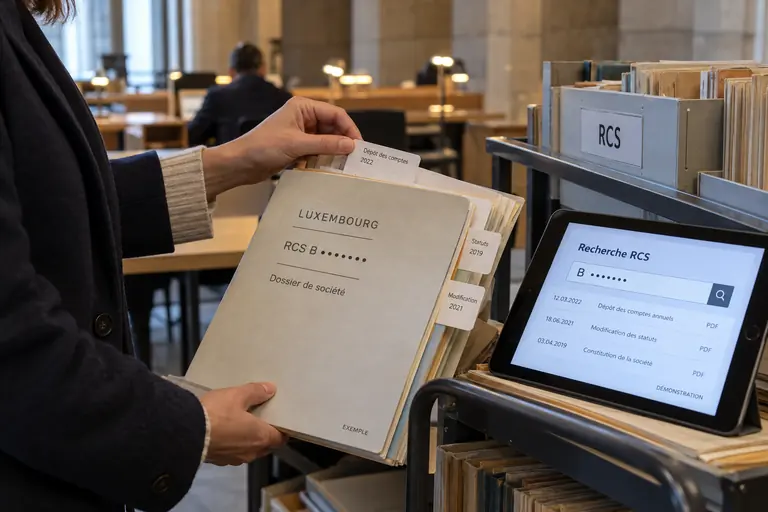
Micronesia’s company register and business records are not gathered in one national file, because in the Federated States of Micronesia the four member states, Chuuk, Kosrae, Pohnpei and Yap, each administer much of the law on business formation and foreign investment. A firm is therefore usually traced through the state where it operates, with the national government handling certain functions. Documents are produced in English, and the amount of information open to the public differs from one state to the next.
A federation with four administrations
The Federated States of Micronesia is a small Pacific federation made up of four states stretching across a great expanse of ocean. Each state has its own governor, legislature and administrative departments, and each preserves a distinct culture and language. The national government in Palikir, on Pohnpei, deals with matters such as foreign affairs, defence arrangements with the United States and some economic coordination, leaving much commercial administration to the states.
This division is the key to understanding where information on firms is kept. Rules on how a business is formed, licensed and taxed come partly from national law and partly from state codes, so the competent office depends on where the activity takes place. A trader on Yap and a company on Pohnpei may therefore deal with different bodies, forms and procedures even though both operate within the same country.
Readers used to a single national registry will have to adjust their expectations. Instead of one search box, they will often have to identify the right state first, then the right department, and then ask for a document. The effort is modest in a small economy, but it requires patience and a clear idea of the exact entity being investigated, including the island where it is based.
Distances reinforce the separation. Chuuk, Pohnpei, Kosrae and Yap lie far apart, and travel between them depends on a limited number of flights. Business people often rely on personal contacts and local agents to move paperwork, which means that reliable information about a firm frequently comes from someone who knows the community as well as from the official file. Combining both sources gives a more balanced picture than either alone.
Foreign investment permits and state business offices
Foreign participation in local business is overseen through investment legislation, and each state has had its own board or office that reviews applications from non-citizens who want to run an enterprise. Some sectors are reserved for citizens, and others are open on conditions. The permit granted to a foreign investor is an important document in the file of a business, because it shows the activities that the enterprise is allowed to carry out.
Business licences are generally issued at state level, sometimes with municipal involvement, and they are renewed according to local rules. A licence shows that a business has been authorised to operate at a given place, which is not the same as incorporation. A shop may hold a licence and trade for years as a sole proprietorship without ever having formed a company, so licensing records and incorporation records have to be read side by side.
Because arrangements have been revised over the years, the name and powers of a given board or office may differ between older documents and present practice. A reader holding a permit that names a body no longer in existence should ask the state government which office succeeded to its functions. Keeping a copy of that answer in the transaction file saves time when banks or auditors later ask for proof.
Incorporation and the forms of business
Companies in the federation are formed under corporate legislation that follows the common-law pattern, with articles, directors and shareholders. Depending on the state, a company may be incorporated locally, and a foreign corporation wishing to do business may need to qualify by filing documents and appointing a local agent. Evidence of this qualification is part of the paperwork that outside parties should request when they contract with a foreign-owned operator.
Sole proprietorships and partnerships remain the commonest vehicles for small trade, such as stores, guesthouses, dive operators and fishing services. Their records are often held as licensing or business-name entries instead of company files. A due-diligence exercise should therefore ask what kind of entity is being dealt with before searching, since the document that proves a sole trader’s existence differs from the one that proves a corporation’s.
Public enterprises exist in sectors like utilities, telecommunications, ports and airlines, and they are organised under their own governing statutes or corporate charters. Some of them are owned by the national government and others by individual states. When a contract is made with such an entity, the lawyer will want to see the enabling law, the board resolution authorising the deal and evidence of the signatory’s powers, not merely a licence.
Land is a sensitive subject in every state, and rules on who may own or lease it affect what a foreign-owned business can do. A company may hold a lease rather than the land itself, and that lease may be recorded in a separate office. Anyone examining a hotel, a factory or a plantation should therefore ask for the land documents in addition to the company papers, since the entity’s value often depends on them.
How to look up an enterprise in practice
Start by establishing the full name of the business, the state and the island, together with the names of the owners. Then address a written enquiry to the relevant state office, asking to confirm incorporation or licensing and to receive a certificate. Many offices respond to email, although response times can reflect staffing levels and distance, and some requests are easier to resolve through a local lawyer or agent.
For banking or procurement, institutions often ask for a bundle of papers rather than a single extract: certificate of incorporation or business-name registration, the current licence, the investment permit where relevant, and tax compliance evidence. Assembling this set demonstrates both legal existence and permission to operate. A missing element is more informative than it seems, because it may show that the business has not completed a required step.
Language is rarely an obstacle for official documents, which are written in English, but names can be spelled in several ways because local languages have been transcribed differently over time. Searching variants of a name, checking the owner’s surname and asking about trading names reduces the risk of missing a valid entry. When a document is going abroad, the receiving country’s rules for legalisation should be checked beforehand.
Timing should be built into any plan. Replies from island administrations can take longer than expected, and a request sent just before a holiday or a public event may wait for weeks. Experienced advisers send enquiries early, follow up politely and keep copies of every exchange, so that if a deadline looms they can show a bank or an auditor what was asked and when the office responded.
Limits, risks and prudent use
The information available about a firm is limited by the small scale of administration. Filings may be incomplete, archives may rely on paper, and public access may be restricted. Accordingly, a lack of online results says little about a business. The fair conclusion is that more work is needed, perhaps through a state office, a local chamber of commerce or a trusted adviser who knows the community.
Ownership can be harder to establish than existence. Family arrangements, nominee holders and informal understandings are common in small economies, and the paperwork does not always reflect the real controllers. For significant deals, due diligence should include interviews, site visits and a review of shareholder documents. Compliance teams at banks dealing with Pacific counterparties pay close attention to this point, in line with international standards on beneficial ownership.
The text above is a general description meant to help readers orient themselves. It is not legal advice, and details such as department names, competences and procedures change. Before relying on any claim about a specific filing, whoever needs certainty should confirm it with the state office concerned or with a lawyer admitted locally, and should keep a written record of the confirmation received.
Frequently asked questions
Is there one national company register for Micronesia?
Not in the usual sense. The four states, Chuuk, Kosrae, Pohnpei and Yap, handle much of business formation, licensing and foreign investment review, with the national government covering some functions. The right office therefore depends on the state where the business operates, and each state keeps its own records.
What documents show that a Micronesian business may operate?
Several, depending on the case: a certificate of incorporation or business-name registration, the current business licence, and for foreign-owned ventures an investment permit stating the permitted activities. Banks and procurement officers normally ask for this whole set rather than relying on any single paper.
How should a foreign partner verify a firm in the federation?
Identify the state and island, then send a written request to the relevant state office for a certificate and licence confirmation, possibly through a local lawyer. Compare the answer with the permit, tax papers and a bank reference, because the records alone say little about finances.