Company registers by country, region and type of entity
Company registers by country follow the legal organisation of each state: some keep one national file, others split records between regions, courts or chambers. Knowing who keeps which register, and for which type of entity, is the first step of any reliable search.
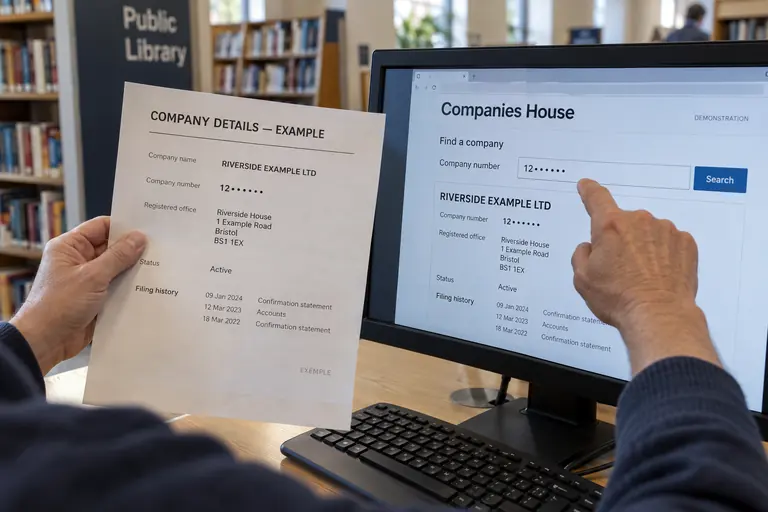
Why company registers by country are not all alike
Every state decides for itself how businesses are recorded, and company registers by country reflect that freedom. Some countries entrust the task to a ministry or an agency, others to commercial courts, and others again to chambers of commerce. The result is a patchwork where the same question, such as whether a firm exists, leads to very different offices.
Legal tradition explains much of this variety. Countries inspired by the Napoleonic codes often tie the register to a court clerk or to a notary, while systems built on English company law favour a central registrar. Hybrid models exist, notably in countries that modernised their legislation by borrowing from both approaches.
Language and alphabet add a further difference. Local spelling of names, accents and non-Latin scripts can complicate a search. Entries can be written in the national language only, in a regional language, or in several languages. A reader who starts a foreign search should expect local terms for legal forms and for the status of the company.
National company registers by country and single-point systems
In many of the company registers by country, one central body holds the whole file. Companies House in the United Kingdom, the Brønnøysund Register Centre in Norway and the Unternehmensregister in Germany, which collects data from the regional commercial registers, illustrate the idea of a central point of access. A national registry makes it easy to search with just a name or a number.
Centralisation does not always mean that every record sits in one database. A central portal may display data that remains legally kept by local courts, and the legal value of an entry then comes from the local body. The portal is a window, and the authoritative record may be somewhere else.
Where a single register exists, it often also assigns the identification number used with the tax administration, social bodies and banks. That number then follows the company from incorporation to dissolution and becomes the best search key.
Federal states and regional business registers by country
Federations divide competences, and company registration in the company registers by country is frequently part of that division. In the United States each state runs its own Secretary of State or equivalent office, so a corporation formed in Delaware appears in Delaware records and not in those of Texas. In Canada, federal corporations are held by Corporations Canada while provincial companies sit in provincial registries.
Other countries split by territory inside a unitary framework. Spain keeps provincial mercantile registers linked by a central one, and Switzerland relies on cantonal commercial registers whose data is also compiled at federal level. Searching without knowing the place of registration can therefore require several attempts.
Companies with activity in several territories deserve extra care. For businesses operating across territories, a company may be registered in one place and carry out activity elsewhere. Branch records, foreign qualification filings and local licences are then spread over different offices, each with its own rules.
Commercial registers per country, by type of entity
Among company registers by country, the file is often organised by entity type as well as by territory. Limited liability companies, joint-stock companies, partnerships and sole traders may appear in the same file or in separate ones. In some systems, merchants are registered individually while companies receive a separate record.
Non-profit and social-economy bodies usually have their own books. Associations, foundations, cooperatives and mutual societies may be listed in dedicated registers kept by a different authority, with different disclosure rules. A search limited to the commercial register would then miss them entirely.
Foreign companies operating through a branch are another special case. They often appear in a register of establishments or branches, which may refer back to the parent company in its home country. Reading both records gives a better picture than either alone.
Registers by type: associations, cooperatives and branches
Associations are commonly registered at a local court, a prefecture or a ministry, depending on the country, and their records tend to be thinner than those of companies. They may show the name, purpose, seat and officers, and little else. Public access varies widely.
Cooperatives often belong to a dual system, with an entry in the commercial register and supervision by a sector body. Their members and capital rules differ from those of ordinary companies, which affects what is recorded and published.
Cross-border structures bring their own registers, and these company registers by country sit beside the national ones. European companies, groupings of economic interest and similar vehicles are recorded in the register of the state where they have their seat, with some details also published at European level. Understanding the type of entity before searching avoids dead ends. A trader who finds nothing for a name should ask whether the entity is a company, an association or an individual business, since each may be recorded under a different heading and in a different office.
How to find the right company registry for a country
To use company registers by country well, start from the country of incorporation, not from the place where the business trades. Then check whether the country has one register or several, and whether the entity type falls under the main file. The official government website of the country, or the portal of its registrar, is the best place to confirm the structure.
Lists of company registers by country compiled by registrar associations and by recognised data providers can help locate the competent body. They are useful starting points, but an official page is preferable when an exact name, an address or a legal reference is needed. When doubts remain, a chamber of commerce or a local professional can point to the correct office.
Foreign visitors should keep in mind that portals are redesigned from time to time and that addresses of web services may change. A bookmark that worked last year may now redirect somewhere else, so verification at the source remains a good habit.
Reading the information with care in each jurisdiction
Two of the company registers by country can show the same data under different labels. A field called capital in one country may correspond to subscribed capital in another, and a status called inactive might be a legal state or merely an administrative flag. Reading the explanatory notes of the register avoids misinterpretation.
Access conditions also vary. Searching may be free of charge in some countries, while extracts, copies or filed documents may be subject to a fee or to prior identification. The scope of public data depends on data protection law, on the legal form of the entity and on the policy of each registry.
Dates deserve a look too: some portals show the situation at the time of the last filing, not at the time of the search, and a change made recently may not yet be visible. No register replaces independent due diligence. For a contract, a loan or an acquisition, the information obtained should be completed with other checks and, where needed, with professional advice adapted to the countries involved.